skip to main |
skip to sidebar
As a physically disabled woman, I know first-hand how invisible we are within the culture when it comes to meeting or even discussing our sexual needs.
I have blogged about my own situation extensively, that is why it was so heartening to read a wonderful and insightful post by Dr. Brooke Magnanti, the real woman behind award-winning erotic U.K. author Belle de Jour.
The post appeared on Brooke's new blog, Sexonomics, which launched earlier this month.
Brooke writes that many clients (I assume women as well as men) who frequent prostitutes have various types of disabilities. Sex workers provide these disabled people with a level of unconditional acceptance and lack of judgment little experienced in the "real" world. They have also learned the requisite skills to provide each client with the maximum pleasure possible.
I cannot tell you how important talking openly and honestly about this topic is. It is also incredibly freeing to be able to acknowledge that I remain a sexual being despite my disability. Bravo to sex workers who understand that, too bad that information has not percolated up to the general population!
Brooke has a unique and important voice that should be taken seriously about many topics that happen to include sex work and sex workers.
In 2009, Brooke revealed her identity after a newspaper was about to disclose it without her permission. Brooke, formerly of Bristol, England, was a noted scientist whose specialist areas were developmental neurotoxicology and cancer epidemiology. She has a PhD in informatics, epidemiology and forensic science and had worked at the Bristol Initiative for Research of Child Health as part of a team that researched the potential effects on babies of their mothers' exposure to toxic chemicals.
But, from 2003 to late 2004, Brooke worked as a high-class call girl for a London escort service. She has written an award-winning blog and several bestselling books based on her experiences as a sex worker. Her writing also formed the basis of the TV series Secret Diary of a Call Girl on Showtime, starring Billie Piper in the title role of "Belle."
Please read this great post in full below, or visit Brooke's new blogsite:
WEDNESDAY, 20 APRIL 201
Sexual Ability
One of the more common questions I am asked as an ex-sex worker is "what sort of a man uses prostitutes"? The answer, if I'm feeling flippant? "All of them."
The reality is that while sex workers can (and we certainly do) have a laugh among ourselves about certain annoying client 'types', it's really no different from a group of friends laughing about non-paid dates. Sex work literally does take all kinds.
One of the most frustrating stereotypes is that of the faceless, nameless, conscience-less "John" who is somehow both ubiquitous (he'd have to be, to be supporting the fictional 80,000-woman-a-year forced sex trade) and at the same time, not a person anyone will admit to having met. Because we'd hate to think people we know bought sex, wouldn't we? And yet, of course they do!
Anyway. One of the best tools to challenging this assumption is asking those who stereotype clients: what about disabled people?
There are all kinds of disabilities, and these have all kind of effects on the sexual lives of people. Some people experience varying degrees of difficulty; others make use of mating-and-datingresources on the internet. Some blog about the ups and downswith sensitivity and eloquence. There are great how-to guidesabout the mechanics of wheelchair sex on the web. There's all manner of great stuff at Outsiders. And of course there is the legendary Bob Flanagan.
But the truth is, even with help, guidance, and guides, it's just not always easy. And so disabled clients are a significant part of the client base for sex workers. If you have been a sex worker for any length of time, you have had a disabled client. And they have probably made you see things somewhat differently. Now, disabled people are not the majority of most sex workers' clients, but they're a significant group.
It's well-known what the effects of denying human touch are to babies and children, but few people consider the effects on adults. In my opinion, touch is a basic human need... so basic, it might as well be at the base of Maslow's hierarchy alongside sleep, food, and all the other physiological needs.
The environment in which most of us operate is almost callously unable to provide this need to those who don't easily fit in physically. Added to which, many adults with disabilities live at home with family members, which can make it difficult to be seen as a sexual adult. Even if you're not the most touchy-feely person, you can probably appreciate how even little things like being a different height to everyone else would have a knock-on result to, say, getting hugs. People who like hugs can usually get them. If they're standing face-to-face with others. Or if their limbs are fully mobile. Or if they have all their limbs.
And for people whose mobility is seriously limited, the most intense touch they might get in a day could be a carer or nurse changing their clothes. That is just not on. Restrictive, sense-deprived environments create knock-on effects for physical and psychological well-being. Here's a 1957 article describing early experiment in limiting senses and mobility, and the effects.
Over time, I came to see sex work as a kind of social service; many others do too. Because access to touch, to pleasure and yes — to sex — is something we regard as natural and accessible to everyone. Even to those without money, without jobs, without rights. And yet there are people in our rich, employed, democratic society who struggle to scratch this basic itch. Fulfilling this need as a paid sex worker is not about pity - it's about providing a basic service. Groups like TLC Trust openly acknowledge this reality.
With constant challenges to legal sex work in the UK (especially in Scotland, where I live), I can't help but wonder if the trendy Swedish model of criminalising clients would actually have a knock-on effect of targeting disabled clients. Law enforcement shows a disinclination to pursue difficult criminals in favour of nabbing easy ones. It feels inevitable that someone is going to start "juking the stats"* to make it look like "sex criminals" are being rounded up in unprecedented numbers. Who are those people going to be? The ones who are easiest to find and catch, of course.
A lot of folks point to the Swedish laws that criminalise clients as if they are some sort of panacaea, in spite of criticism of their actual effectiveness. And they defend them using ideology alone: invoking a world in which all who pay for sex are able-bodied, wealthy, and male. A world in which all sex workers are disadvantaged, poor, and female.
The myths perpetrated by opponents of sex work assume that men always have more power than women, and that only cisgender, heterosexual people are involved. It's not true.
It's not a realistic view of the diversity of what goes on between sex workers and clients. Passing laws based on the narrowest and most stereotypical of assumptions will surely become just one more example of bad law.
* - Don't get me wrong, I'm a fan of statistics. But I'm also a fan of transparency in statistics... making it clear exactly what collection and analysis methodology has been used to draw which conclusions. Part of the point of the scientific method is to put it all out there so the accuracy of your results can be tested.
This post actually came from a Twitter discussion with another blogger about something else entirely — will get to writing about prostate massage another time!"
Posted by Belle de Jour at 05:20
If you have any interest in thoughtful discussions about sex-related and scientific topics, I urge you to follow Brooke's blog. She is a unique woman, and an equally unique writer who should NOT be missed.
Brooke's books include: Belle de Jour’s Guide to Men, 2009; Belle’s Best Bits, 2009; The Intimate Adventures of a London Call Girl, September 2005; The Further Adventures of a London Call Girl, May 2007; and Playing the Game, June 2009.
Each one is well-worth reading and re–reading, you can trust me! You can find all of her books at the U.K.’s largest independent bookseller, Waterstones.
Also check out Brooke's op-ed articles on a variety of topics including reforming libel law in the UK, as well as the importance of ensuring the rights of sex workers.
— The Curator
If you have not been following HUGE blog news recently, you might not know that Belle de Jour has launched a wonderful new blog under her real name, instead of her famous pen name.
After almost a year hiatus, Dr. Brooke L. Magnanti, 35, the woman behind the famous erotic British author and award-winning blogger, launched Sexonomics last week.
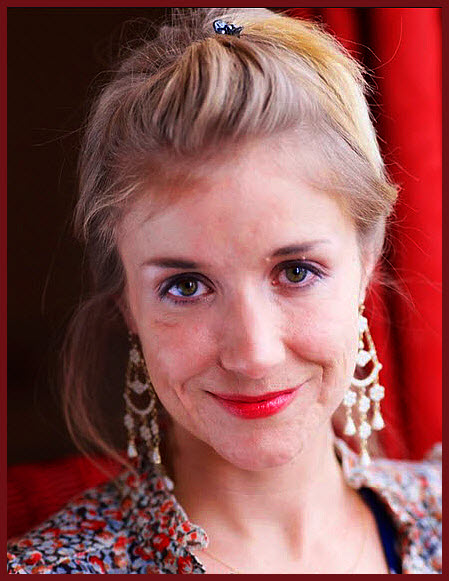
But, this new blog proudly proclaims her name and is adorned with a beautiful photograph of Brooke, who writes:
"Hi! My name is Brooke Magnanti, but you may know me better as the author of theBelle de Jour blog and books. This is where I write about social & political stuff, mostly relating to sex. Yes, there's going to be a book.
As an ex-sex worker, you can imagine what my bias is. Nevertheless, I am also a scientist, so will do my best to present the evidence base for each post.
I love discussion but don't have the time to moderate comments. By all means, feel free to discuss on Twitter or your own blog!
Speaking of which, I'm on Twitter — you can follow me here."
Brooke is beyond bright, articulate and educated, she's a writer with an important voice about many topics that happen to include sex work and sex workers.
In 2009, Brooke revealed her identity after a newspaper was about to disclose it without her permission. Brooke, formerly of Bristol, England, was a noted scientist whose specialist areas were developmental neurotoxicology and cancer epidemiology. She has a PhD in informatics, epidemiology and forensic science and had worked at the Bristol Initiative for Research of Child Health as part of a team that researched the potential effects on babies of their mothers' exposure to toxic chemicals.
But, from 2003 to late 2004, Brooke worked as a high-class call girl for a London escort service. She has written an award-winning blog and several bestselling books based on her experiences as a sex worker. Her writing also formed the basis of the TV series Secret Diary of a Call Girl on Showtime, starring Billie Piper in the title role of "Belle."
As any fan of Brooke's knows, she'd been dating then living with a man referred to only as "T" in her books and blog — because he first began leaving his toothbrush in her flat, then gradually the rest of his belongings. While Brooke has not publicly named him, they have will have been married a year this month.
Recently, she and her husband moved to Scotland, after Brooke decided to take the hiatus from penning new entries for her award-winning blog (Where she says simply, "Belle de Jour is the pen name of Brooke Magnanti, a UK-based writer and science researcher. Interests: whiskey, taphonomy, PGP encryption), in favor of concentrating on writing the new book, a variety of articles, and now as it turns out — her wonderful new blog.
She also decided to leave the field of science behind because of the funding crunch in the U.K. for research projects. She has said that since she has other means of support — name her incredible writing — she didn't want to take a science slot from a researcher who does not.
Since the debut of Sexonomics, it has already generated some lively commentary. As a loyal fan of everything that Brooke writes, I am re-posting her latest blog entry that was posted yesterday. Please read it in its entirety below, or directly at her new blog site:
FRIDAY, 8 APRIL 201
Preaching to the Converted
"When ancient cultures looked at the night sky they saw groups of stars, just the way we do today. They drew imaginary lines between the stars to make pictures and tell stories. The pictures were constellations.
One of the most easily recognisable constellations is Ursa Major (you probably call it the Big Dipper, or the Plough). From Earth the stars seem inextricably linked and for most of history we have had no way of telling otherwise. But we now know that they’re not close to each other at all. Some of the stars in the Plough are 78 light years away from us; others over 120. It’s the particular angle we see them at that makes them look close to each other. If you were living on a planet orbiting some other star, the Plough wouldn’t look the same because you would see the stars from a different direction. And constellations change over time. The last two stars on the handle of the Plough are moving quickly; in 50,000 years it will look completely different from how we know it today. Even here on Earth.
Making constellations from unrelated information happens a lot. But just because things seem to be connected to each other doesn’t mean they are. Humans are hard-wired to find patterns and seek explanations, but sometimes, this tendency can lead to the wrong pictures being drawn.
When it comes to the subject of sex, the habit of making constellations is so pervasive that we take it for granted. Myths, assumptions, and preconceptions take hold even when there is rational evidence to the contrary.
Recently, inspired by a post by Jane Fae on Freedom in a Puritan Age, I contributed a bookending piece. By and large, I agree with Jane's assessment (and Dr Petra's prediction) that the mainstream discussion of sex is getting narrower and more judgmental. I don't like the way in which people invoke pornography, child sexualisation, trafficking, and other issues in the same breath as if they are the same things. I especially don't like when MPs and government do it. But they're responding to a perceived issue that some poll somewhere tells them is important. The problem, as I see it, is how to reach out to people whose views are being influenced by a heavily biased media, and other sources all to happy to join up a constellation and call it the truth.
The title of my piece on FIPA is slightly misleading... while I do believe the 'anti-sex lobby' is irrational, I also think the majority of people worried about these topics are anything but. I can sympathise.
Plenty of people have opinions about these issues, and why not? After all, sex is virtually a human universal. It’s something most of us can claim, if not expertise, at least an enthusiastic amateur interest.
Which is fine, when it comes to something for which we have (ahem) hands-on experience. But once reality diverges from what we know first hand, all kinds of strange rumours can take hold. And once a rumour starts to spread, it’s often hard to stop.
From the first rumours in the school yard, to the first fumblings in the dark, has there ever been a topic more talked about, thought about, argued about? We begin by learning about sex and sexuality from the things we tell each other, and later, learning from our own experiences.
As we get older and gain more insight, our gaze widens: from When will I have sex? What will it be like? How are other people doing it? to broader questions of sexual orientation, relationships, and gender issues. We’re fascinated with the periphery of sex as well as the nuts and bolts of it – prostitution, porn, and sex crimes, just to name a few. Stories about these topics are guaranteed to get news coverage, magazine features, and column inches in the papers. Memoirs, exposes, and kiss-and-tells fly off the shelves. We get our expertise however we can.
But the less direct experience we have, the more we turn back to gathering information the old-fashioned way. The schoolyard way.
Sex, sexuality, and sex work minutiae — for people outside the loop — can be confusing. It's difficult to get and process information about things most of us are never directly involved with. We've a sense all of this stuff is important, but neither the time nor the energy to peruse the scholarly literature, discuss the issues in depth, and get involved. (See also: the problem with science journalism.)
For example, it was once easy for people to believe secondhand stories and rumours about homosexuality, because most people didn’t know anyone who was out. As homosexuality has become more open and more visible, and therefore more people know that they know gay people, the malicious rumours and hatred have finally begun to wane. According to polls by the Washington Postand ABC News, the percentage of people supporting equal marriage rights for gay couples has risen in direct proportion with the visibility of gay people.
But they and other groups who are not widely accepted deal with the brunt of the rumour mill’s damage. Sex workers are another such group. Because a lot of people don’t think they know anyone in sex work, the assumptions and stereotypes hold a lot of sway over opinions in that area. After all, without firsthand experience, who’s to say otherwise? Especially when there are many reasons why sex workers stay "in the closet". What is clear is that we need some way of telling what is real from what is myth.
Also, it's clear that there is a certain amount of (for lack of a better word) circle-jerking in some corners of the internet. I use the term 'the converted' advisedly — some of the harshest, and most underhanded, critics can be people whose point of view is indistinguishable from yours to outsiders. There's a danger in addressing every niggling internecine concern that alienates the mainstream and diverts energy from getting most of the message to most of the people most of the time.
Take for instance the previous entry, which mentions research by (among others) J Michael Bailey. Certain aspects of his methods have come under criticism — though not particularly the studies I mentioned. However, it was as if the word Bailey was a red rag to particular people. Simply by mentioning the relevant findings by a person they hated, I woke up to a Twitter and email storm. That's a pity, because the more I read of Bailey's work in the past year, the more I found that while his critics had a point, there was a lot I agreed with. I could ignore the stuff I agree with. That would probably keep the circle-jerk happy. But it does nothing to advance what this blog is trying to say to a wider audience... those for whom the idea of scientific investigation of human desire may be a new and interesting idea.
Long story short (too late!), I may have lost a few people over daring to mention Bailey, but worrying about breaking a few eggs on the way to an omelette? Never been something that keeps me up at night.
The way I see it, if you're liking and linking to this blog, then you probably are already one of the people who more-or-less sees things the way I do. And if so, I love you for it. Without the research and commentary generated by the sex-positive community, I would have almost nothing to write about. But we spend a lot of time either talking to each other, or arguing with the entrenched opposite. There's a giant group of people in the middle, getting skewed and outdated information because not so many of us are appealing to them. With acceptance such a big issue for so many of us, maybe that's where we should be targeting effort... rather than losing energy on the few whose minds, frankly, will never be changed.
Blogs by sex and relationship educators do a pretty decent job of attempting to bridge this gap. And there are some academics, such as Laura Agustin, who blog about their research and writing. These sorts of things are a vital link between the people who have information, and the many who want it. But there are vastly more people with expertise in these topics who operate entirely within the academic context or only have the time and energy to focus on their jobs. And while informative blogs and sites by current and ex sex workers are popular, there is still the assumption that these people are for some reason the "exception" rather than the "rule". Effective public outreach by the sex-positive (or even just hype-skeptical) community still struggles to get off the ground.
What are ways we can open the discussion, inform and involve the undecided middle? Ideas on the back of a postcard to the usual place, please."
Posted by Belle de Jour 04:57
If you have any interest in thoughtful discussions about sex-related and scientific topics, I urge you to follow Brooke's blog. She is a unique woman, and an equally unique writer who should NOT be missed. It would be a genuine mistake to reject her blog simply because she mentioned some relevant facts from a man who is very unpopular in some circles. [Note: To read one of the counterpoints, see QuietRiotGirl's comments.]
I would be remiss to discuss Brooke and not to mention her wonderful books, which include: Belle de Jour’s Guide to Men, 2009; Belle’s Best Bits, 2009; The Intimate Adventures of a London Call Girl, September 2005; The Further Adventures of a London Call Girl, May 2007; and Playing the Game, June 2009.
Each one is well-worth reading and re–reading, you can trust me! You can find all of her books at the U.K.’s largest independent bookseller, Waterstones.
Also check out Brooke's op-ed articles on a variety of topics including reforming libel law in Britain, and well as the importance of ensuring the rights of sex workers.
Thank you Brooke, for giving us all something well-worth reading again! Long may you reign, m'dear!
— The Curator
The pope is at it again: Confusing the faithful and activists on whether the use of condoms to help stop the spread of AIDS is OK with the church.
I respect all religious views, but I want to be up-front here and happily disclose that I am a FORMER Catholic, and the most recent flap has only strengthened my resolve to never, ever go back.
How is it even possible to have to think about whether the use of condoms to help stop AIDS and all STD’s is advantageous? It is a no brainer, but apparently the Vatican remains stuck in the wrong century, as usual. It also remains blatantly homophobic and obviously bigoted, views it has held close to his hypocritical chest and has carefully nurtured for over 2,000 years.
While some AIDS activists welcomed the pope’s apparent softening of the Vatican’s opposition to the use of condoms, sex workers said his concession, directed only at infected prostitutes, demonstrated both his prejudice, and stark removal from reality. Not to mention, his apparent belief that sex workers are responsible for AIDS!
In a book-long interview entitled Light of the World to be published on Tuesday, the 83-year-old German pontiff suggests that using condoms could be justified in some cases on moral grounds to prevent infecting others with the virus causing AIDS, citing the example of a “male prostitute.”
In a book to be published this week, Benedict XVI said there could be “justified individual cases” in which condoms could be used, softening Rome’s blanket ban on contraception, one of the most controversial issues facing the Church.
"In certain cases, where the intention is to reduce the risk of infection, it can nevertheless be a first step on the way to another, more humane sexuality," the head of the world's 1.1 billion Catholics said, giving as an example a male prostitute having sex with a client.
Of course, he gave no guidance on the long-standing moral and religious question of whether it would be permissible for a married couple, in which one partner is HIV positive, to use condoms in order to prevent the other partner from becoming infected. Not to mention, the millions of homosexuals worldwide who are sexually active and want to protect themselves and their partners from AIDS and any and all other STD’s.
If that is what he meant even in this very narrow area, it is quite a contradiction, since the pope spoke out against condom use as recently as March 2009 during a trip to Africa. At that time, the pope caused an international uproar by claiming that condoms “increase the problem” of AIDSs. Ridiculous, disgusting and incredibly dangerous, in my view.
Pressed yesterday by Peter Seewald, a German Catholic journalist, whether he meant that the Church was not opposed in principle to the use of condoms, Pope Benedict replied: “She of course does not regard it as a real or moral solution but, in this or that case, there can be nonetheless, in the intention of reducing the risk of infection, a first step in a movement toward a different way, a more human way, of living sexuality.” Um, what?
While the Vatican’s ban on artificial birth control was set out in a 1968 encyclical, it has not formally documented its position on condoms as a means to combat AIDS.
“This is a significant and positive step forward taken by the Vatican,” Michel Sidibé, executive director of UNAids, said. “This move recognizes that responsible sexual behavior and the use of condoms have important roles in HIV prevention. This will help accelerate the HIV prevention revolution.”
Predictably, Jon O’Brien, head of Catholics for Choice, a U.S. group, commented quite positively, proclaiming, “It is a marvelous victory for common sense and reason, a major step forward towards recognizing that condom use can play a vital role in reducing the future impact of the HIV pandemic.”
O’Brien asserted that the pope’s words were especially significant for “the many, many people who work for Catholic aid agencies and have been secretly handing out condoms while fearing that they will lose their jobs.”
But, the Vatican today apparently contradicted that all-too rosy interpretation as well as its Pope! The Vatican's chief spokesman today said that the pope is neither "reforming or changing" the Catholic Church's position banning condom use. Reverend Federico Lombardi emphasized that the church does not consider condoms a "moral solution" to sexually transmitted diseases, such as AIDS.
Some activists, including dissident Catholics, were dismayed that the pope only specifically cited the narrow example of a male prostitute – although the Vatican’s own newspaper fueled confusion by translating his words in Italian as a female prostitute.
“Thirty years of Vatican prevarication and refusal to admit the gravity of the HIV pandemic – which has already claimed the lives of 25 million people and threatens not only the 33 million currently affected but their partners and offspring – cannot be wiped away by a narrow exception constructed by a papacy under fire,” commented Mark Harrington of Treatment Action Group.
The pope’s shift was also interpreted by some Vatican observers as a communications ploy to soften his image as an out-of-touch fundamentalist whose papacy has been tarnished by revelations of hundreds of cases of child abuse committed by priests, sometimes protected by their bishops.
Sex workers were equally unimpressed by the pope’s new insight. “What the pope said is not connected to reality,” said one 23-year-old male prostitute in Rome who asked not to reveal his name. “No one cares about him. Maybe it is interesting from the theological point of view but in practical terms it makes no difference.”
A representative of the International Committee on the Rights of Sex Workers in Europe said his remarks were a, “damn sight better than saying condoms are of no use, but still pins the blame for AIDS on sex workers who face discrimination and stigmatization.” She also questioned whether the pope was really directing Catholic social workers to do anything differently.
Catholic aid organizations account for some 25 per cent of AIDS programs in sub-Saharan Africa, providing education, treatment and working against the stigma attached to the disease.
— The Curator
The exposure over the weekend of a so-called female escort who allegedly penned ‘The Real Princess Diaries’ as a fraud that was perpetrated by a male government employee has generated a lot of comment within the sex worker community and outside of it.
I was especially interested to read comments by two of the genuine article: One who remains a sex worker, Tasty Trixie, and the other who left the field, the always fabulous British erotic author, Belle de Jour.
Last year, Belle step out from behind her famous pen name and revealed her identity. She is Dr. Brooke Magnanti of Bristol, England, a noted scientist whose specialist areas are developmental neurotoxicology and cancer epidemiology. She has a PhD in informatics, epidemiology and forensic science and had worked at the Bristol Initiative for Research of Child Health as part of a team that researched the potential effects on babies of their mothers' exposure to toxic chemicals.
But, from 2003 to late 2004, Brooke worked as a high-class call girl for a London escort service. She has written an award-winning blog and several bestselling books based on her experiences as a high-end, call-girl in the sex industry. Her writing also formed the basis of the hit TV series Secret Diary of a Call Girl, now in its third season on Showtime, which stars Billie Piper in the title role of “Belle.”
Brooke was pretty much hounded by journalists throughout the U.K. who sought out Belle’s true identity relentlessly for years. During that time, there was constant speculation that Belle was also a fraud, and that the author was a man. Nothing could have been further from the truth. Brooke came forward on her own terms, after learning that a newspaper had managed to finally discover who she was, and had been planning an unauthorized expose. Brooke was everything, and more, that she had ever purported to be. She is also an incredibly talented writer, who may have gained fame because of the topic that she wrote about, but has maintained that fame because of the quality of her writing – and that sparkling ability continues to amaze.
Disgustingly, the ‘Real Princess Diaries’ took much of Brooke’s real-life experiences and turned them into poorly written fiction that the author asserted to be non-fiction. So, who better than Brooke to comment about this whole mess.
This is Tasty Trixie, in her own words:
“My name is Trixie. I live in a small town near Seattle, Washington. I also feel like part of me lives on the world wide web because of this site; I'm alive wherever people see me on their monitors and hear my voice through my videos, spycams and live shows.
I began doing private webcam shows and phone sex back in the year 2000 and started building this website for myself and my fans in 2002. I do a lot of different things online (blogging, podcasts, etc.) but for the past six years my main focus has been here on my site, sharing myself with my members.
...My website is a very personal labor of love where I share my homemade porn, true stories, and spycams allowing my members to see and hear inside our house around the clock.”
The real author of Diaries had claimed to be the sexy, 24-year-old “Alexa Di Carlo” who plied her trade in San Francisco where “she” was supporting herself while she attended grad school. “She” was unmasked as Thomas "Pat" Bohannan, who works for a government agency in Delaware.
The persona of Alexa DiCarlo (aka AlexaRPD, aka Caitlain of 'Caitlain’s Corner'), was allegedly that of an on-line sex worker/escort who wrote explicitly about “her” experiences and struggles.
By lying and posing as a sex worker, Bohannan insulted all readers, but especially those who do make their living in the sex industry, and most especially women. He created then hid behind a character – a sexy woman – that would entice and even arouse readers. He also pretended to be a knowledgeable sex educator, who frequently gave advise to readers in that guise.
Bohannan pulled the plug on his blog, which sadly won awards for its content! He did so without remorse, instead claiming his privacy was invaded by the disclosure. This is not an issue of privacy but of intellectual and literary fraud perpetrated perhaps for monetary gain, but certainly for ego enhancement and aggrandizement, and maybe for some hidden personal sexual agenda.
One can only imagine that Bohannan patted himself on the back quite a lot during the past two years for so thoroughly duping his readers – but not most sex workers, as they were the ones who often challenged the blog’s authenticity. It seems clear that his worst derision was directed at women. I can only hope that Bohannan is no longer amused.
Both Tasty Trixie and Brooke wrote about the ‘Real Princess Diaries’ scandal on the blog of Charlie Glickman, a respected Adult Sexuality Educator. Trixie’s comment appeared before Brooke’s so I have reposted them here in that order. Do check out Glickman’s post directly at his blog.
Trixie
Oct. 23
“You can create a harmless fictional or semi-fictional persona WITHOUT fabricating specific educational credentials you don’t have (name of school, etc. and relying upon that to establish trust you don’t deserve & set yourself as an expert you are not), WITHOUT stealing images to use on your blog & fake escort portfolio from a real sex worker who specifically does non-nude, tease-only projects, WITHOUT putting real sex workers at risk by using your fake fucking self as a reference to so they’ll see you or others as clients when you have not been vetted by a real sex worker, WITHOUT telling real sex workers and real sex educators how to do (and not do) their jobs, etc.
“Alexa” did all that and more, WITHOUT one morsel of apology, expression of remorse, or admission of any wrongdoing whatsoever, instead consistently manipulating her rabidly loyal fans into thinking S/HE is the person wronged.”
Belle de Jour
Oct. 23
"I’m 100% with Trixie on this one.There have been anonymous blogs in the past that turned out not to be authentic (Shirley Shave for instance) – it’s disappointing for sure, but it’s a whole other world when someone puts themselves forward NOT as telling their own story, but as an actual source of counselling and advice.
To claim to have academic qualifications you don’t have in order to gain others’ trust is unethical. We bloggers do not have a written code of conduct, but there is certainly a code that most people adhere to, especially in sex blogging.
I hesitated to comment on Alexa in the past, because I knew before coming out there were people who doubted me too. It’s frustrating to hear people call you fake when you know you’re not, but cant fight back because you have a life and career to protect.
However, it’s worth pointing out (and this is true for many anonymous or pseudonymous sex bloggers) that you have to gain trust. Obviously my agent and publisher believed in me, as did a couple of people in sex education in London who met me in person. And crucially people whose opinions I respected ([Tasty] Trixie and [Mistress] Matisse for instance) believed in me and supported me. So it’s possible to be anonymous and still prove your bona fides to the people who count. The person writing the Alexa blog has never done that, even though plenty of discreet, trustworthy people tried to reach out and make it happen.
Why does any of this matter? Why is this not just ‘oh, someone’s having a bit of fun?’ Because “Alexa” referred men to sex workers, potentially putting them at risk. Because some sex workers were threatened with exposure – perhaps not by Alexa, but certainly due to the situation. Because there are already countless bullshit stories about sex work peddled to the media every day, and someone claiming experience they don’t have Does Not Help. Because genuine sex educators fight to have their research taken seriously by prurient morons in mainstream media, and someone who tweets about “teaching your sons and daughters to suck ass and lick pussy” is absolutely not for real.
If someone was blogging about being disabled, and turned out to be able-bodied, there would be an uproar. If an anonymous blogger wrote about being a racial minority or queer, but wasn’t, that would be clearly manipulative and unethical: that person would rightly be shunned. But somehow, because it’s sex work, people still queue up to say “don’t take it so seriously!” Fuck that – we are a targeted, criminalised, marginalised minority who have the right to tell our own stories, and the right to protect that right.
At Desiree this summer I was very aware of how privileged I am to have the support to be fully out as an ex-sex worker to the world. I don’t take the position lightly. What offended me most was knowing someone like “Alexa” was riding the coattails of what I and countless others have achieved with real work, hurt, sweat, graft, fear, and love. Making a mockery of us, as if sex work is something anyone can do. It isn’t.”
Recently, Brooke took a hiatus from penning new entries for her REAL and award-winning blog (where she says simply, “Belle de Jour is the pen name of Brooke Magnanti, a UK-based writer and science researcher. Interests: whisky, taphonomy, PGP encryption), and from commenting on Twitter, or other social media outlets, except for an occasional tidbit or comment like the above gem.
Brooke’s books are Belle de Jour’s Guide to Men, 2009; Belle’s Best Bits, 2009; The Intimate Adventures of a London Call Girl, September 2005; The Further Adventures of a London Call Girl, May 2007; and Playing the Game, June 2009. Each one is worth reading, and not just because of the sexual content, but for Brooke’s unique writing voice – trust me! You can find her books at the U.K.'s largest independent booksellers, Waterstones.
Also check out Brooke’s op-ed articles on a variety of topics including reforming Britain’s libel law.
— The Curator
The incomparable erotic author Belle de Jour, otherwise known as Dr. Brooke Magnanti, was back in print with two great, but quite different, British interviews about her work in the sex industry.
Last year, Belle step out from behind her famous pen name and revealed her identity. Brooke, of Bristol, England, is a noted scientist whose specialist areas are developmental neurotoxicology and cancer epidemiology. She has a PhD in informatics, epidemiology and forensic science and had worked at the Bristol Initiative for Research of Child Health as part of a team that researched the potential effects on babies of their mothers' exposure to toxic chemicals.
But, from 2003 to late 2004, Brooke worked as a high-class call girl for a London escort service. She has written an award-winning blog and several bestselling books based on her experiences as a high-end call-girl in the sex industry. Her writing also formed the basis of the TV series Secret Diary of a Call Girl, now in its third season on Showtime, and starring Billie Piper in the title role of “Belle.”
Recently, Brooke took a hiatus from penning new entries for her award-winning blog (where she says simply, “Belle de Jour is the pen name of Brooke Magnanti, a UK-based writer and science researcher. Interests: whisky, taphonomy, PGP encryption"), and from commenting on Twitter, or other social media outlets, except for an occasional tidbit or comment.
Since I began my blog, I had unerringly reprinted her own amazing blog posts, along with any interviews that featured her. Despite her generally dropping out of active public sight, I remain unabashedly supportive of Brooke in all of her endeavors.
The following article appeared Sept. 16, in the U.K.’s Telegraph and is my favorite that has been done. It is a wonderful attempt to get to know Brooke, not Belle, for a change. I congratulate its author, Jessica Salter, for writing it.
I say this because in my view, it would be a very serious mistake to shackle this talented woman to the sex-book genre only – Brooke’s abilities far exceed the titillation of the senses, but also titillation of the mind.
The second article appeared in today’s Yorkshire Post, and relates to sex-industry topics. It is a much more traditional interview approach, so less illuminating.
Let me be very clear: I am thrilled to read in and all articles featuring Brooke discussing her sex-industry experience, but I would also be just as thrilled to read any feature in which she talks about – or especially writes on – any topic because she is simply just that good. Frankly, Brooke Magnanti is unforgettable.
Please read the Telegraph’s article in full below, or at the newspaper’s website:
Telegraph, UK, Sept. 16
Brooke Magnanti, author, blogger and former call girl
The 34-year-old discusses growing up in Florida, why she became a call girl and how her secret identity was revealed
By Jessica Salter
[Note: All photographs that appear in the article below were taken by Lucy Levene, and appear as they do at the website.]
Dr Brooke Magnanti, 34, a research scientist with a PhD in informatics, epidemiology and forensic science, is better known as Belle de Jour, the anonymous blogger who wrote about her life as a high-class call girl. Her blog spawned two books, which were adapted for the television series The Secret Diary of a Call Girl, starring Billie Piper. She unmasked herself last November, and currently works for the Bristol Initiative for Research of Child Health, studying the effect of pesticides on children’s brain development. Her latest book, Belle de Jour’s Guide to Men (Phoenix), is out now.
Routine I’m usually up by 7am but it takes me an hour of holding a cup of tea and listening to Radio 4 before I can do anything useful. Then I answer some emails, do a bit of writing, and then go to work at about 10am.
Florida I bought this citrus crate label (pictured) on eBay and framed it because it reminds me of growing up in Clearwater in west Florida, where you saw the crates of oranges and these labels everywhere. When I grew up, most of Walt Disney World hadn’t been built yet, and the area was just beaches and orange groves. When I go back I can still see little bits of old Florida poking through.
Fire Before I moved to Sheffield to start my PhD in forensic pathology, I left most of my things at my mum’s house in Florida and just took a suitcase and a bunch of books over to England with me. A couple of weeks later I got a phone call from my auntie. The first thing she said was, 'Don’t worry, your mum is OK,’ but she was calling to tell me that the house had burnt down and everything had gone.
Gourd One of the few old things that I still own, and that I take everywhere with me, is this little gourd (pictured), which has seeds inside. My uncle lives in Ecuador and he sent it to me when I was about five.
Rowing I started rowing when I got to Sheffield and one of my memories of living there was when the river was frozen over and we had to smash through the ice with the boat. This tankard (pictured) is from one of the regattas we won.
Cash flow After I had written my thesis I moved to London to find a job because I’d pretty much run out of money. I couldn’t get a bank loan or an overdraft because of my student visa, and I couldn’t get a job in science because my PhD hadn’t been awarded yet. A friend gave me a cheque for £150 to help out. I just looked at it and thought, 'But what about next month?’
Call girl In 2003 I met a well-heeled couple in a restaurant and we went back to their place. Afterwards the man called me a cab and shoved loads of notes in my hand, but it was only when I was inside that I thought, 'This is more than the cab costs.’ Then it dawned on me that working as a call girl wouldn’t be so much different from that evening. It was something I was willing to try, and if I didn’t like it, no one had to know. I charged £300 an hour, of which I got to keep £200 (the rest went to an agency). The average appointment lasted two hours and I saw clients two or three times a week until I gave up a year and a half later.
Birth of Belle I started the blog because I wanted to talk about what was happening to me. I’m very used to chatting with friends and suddenly I had all these anecdotes that I couldn’t tell anyone. I had already been writing a blog about science and another one about whisky, so I knew how to write them. I kept the science one going for a while because I didn’t want anyone to figure out the two were linked and work out who I was.
Chest of drawers I bought this chest of drawers (pictured) with the money I won for a blogger prize. This was before the books so I thought if nothing else came of Belle, in years to come I’d have something to show for it.
Relaxing hobbies My grandmother taught me how to knit. I find it so relaxing and I’ve usually got some kind of project on the go – at the moment it is a jumper (pictured). The really irritating thing is you can’t take your needles on flights any more, which is where I used to do most of my knitting. I love to bake as well.
Coming out A British blogger called Darren worked out my identity in 2004, because he’d followed a previous blog that I’d written, but he kept my secret. Unknown to me he had set up a widget that alerted him whenever my real name was Googled along with Belle de Jour’s, and he didn’t get any hits for five years. But last October he started getting odd hits and he traced the IP address to a tabloid newspaper and told me via Twitter. A few weeks later a reporter broke into my workplace. I decided to beat the tabloids to it and go public.
Relief The strangest part was telling my mum. She now lives in New York and I kept trying to call her but my phone kept dying. I knew I had a deadline because an interview with me was coming out in a newspaper so I ran out and bought a new phone. I thought this is definitely not the type of conversation to have on email. She was great about it but it was a very strange moment when she called me back, having bought and read my books and given them to my grandmother.
~~~~~~
The following news feature below appears in today’s Yorkshire Post, or at its website:
Yorkshire’s National Newspaper
Yorkshire Post, Sept. 21
Why money has stripped away class barriers in the sex
By Grace Hammond
In recent years, the middle classes have been busy monopolising areas they previously feared to tread.
Once sleeping in tents was only for those unable to afford to holiday abroad. Now you can't move on the average campsite for well-off families wanting to get back to basics. Dog tracks have seen an influx of professional punters and even bingo has be come a mecca for the middle classes.
Now in what may well be the final frontier, it seems they are also taking over the sex industry.
According to recent research by the University of Leeds, one in four lap dancers have a degree – and one of the most striking details of the Wayne Rooney affair was the background of two women he allegedly took to the Lowry Hotel.
Both had been brought up in middle class families, yet for one reason or another found themselves working as escorts, leaving their embarrassed parents to issue public apologies.
"Obviously, the economy is the key," says research scientist Dr Brooke Magnanti, aka Belle de Jour, whose infamous blog about her life as a call girl was made into a TV series starring Billie Piper. "More and more women are realising that the stereotype of the drug addicted streetwalker does not always (or even often) apply, and are voting with their wallets, so to speak.
"We've come a long way in accepting people for doing what is, let's face it, a legal and storied profession."
While inner city red light districts may still be the preserve of a vulnerable underclass, lap dancing clubs and escort agencies have a far wider cross-section of employees. It's easy to see why. The dancers questioned in the Leeds survey took home an average of £232 a shift. With most working between two and four shifts a week, an annual income of between £24,000 and £48,000 is more than most part-time jobs would ever pay.
For some, the sex industry may provide a good wage, but the seemingly endless supply of women wanting to sign up is bad news for campaign groups like the Fawcett Society and Objects, which believe they are little more than a form of commercial sexual exploitation.
While many may end up working as lap dancers and escorts of their own free will, there are concerns a significant number will become trapped in the job, unwilling to move on because of the money.
"No one should be forced to do any kind of work that they really don't want to do, simply to survive," says Catherine Redfern, of The New Feminist Movement, "and obviously this applies whether a woman has a degree or has no qualifications at all. The idea that this is more of a concern just because women with degrees are doing this work, is abhorrent.
"The fact that it's predominantly female students, and not male students who are doing this, highlights the entrenched sexism of the sex industry.
"It promotes the idea of women as passive sex objects to be looked at by men. We need to question why this is considered the norm, how society is set up to encourage men and women to see their sexuality in this rigid, binary way, and encourage a much more diverse view."
Perhaps unsurprisingly, Magnanti, who was completing a PhD at Sheffield University's department of forensic pathology when she became a call girl, takes a far more pragmatic view.
"I guess I was the only person in the country who wasn't surprised at the survey's results," she says candidly. "Stripping and sex work are a lot like waiting tables – some people have what it takes to do it for life, but most people are just moving through it on the way to another career.
"Many of the women I met in the business were well-educated enough to know a minimum wage job couldn't possibly fund their futures.
"In my opinion, it says less about women and feminism than it does about education and government priorities. I'm sure the survey results would have been very different if the study was conducted back when students had grants for university fees.
"However, when it comes to sex and people's private lives, it is absolutely hypocritical for others to judge.
"There isn't a person in this country with a spotless past if you look hard enough."
~~~~~~
As Belle de Jour, Brooke has written four books in addition to her blog about her work in the sex industry. Her fifth book, Belle's Best Bits: A London Call Girl Reveals Her Favourite Adventures .
Here is a description of that book, provided by Orion Books:
“From the summer of 2003 Belle charted her day-to-day adventures on and off the field in a frank, funny and award-winning diaries. She was the first to reveal (among other things) how she became a working girl, what it feels like to do it for money, and where to buy the best knickers for the job. She also discusses her efforts to change from 'working girl' to working girl, whilst sneaking off to visit clients in her lunch hour. From debating the literary merits of Martin Amis with naked clients to smuggling whips into luxury hotels, this is a no-holds barred account of the high-class sex-trade, and an insight into the secret life of an extraordinary woman.”
Her other books are Belle de Jour’s Guide to Men, 2009; The Intimate Adventures of a London Call Girl, September 2005; The Further Adventures of a London Call Girl, May 2007; and Playing the Game, June 2009. There is not a ringer in the bunch – trust me!
Also be sure to check out her op-ed articles on a variety of topics including reforming libel law in Britian.
[Note: The top photograph of the beautiful Brooke was taken by Geraint Lewis]
— The Curator
.
Here is a description of that book, provided by Orion Books:
“From the summer of 2003 Belle charted her day-to-day adventures on and off the field in a frank, funny and award-winning diaries. She was the first to reveal (among other things) how she became a working girl, what it feels like to do it for money, and where to buy the best knickers for the job. She also discusses her efforts to change from 'working girl' to working girl, whilst sneaking off to visit clients in her lunch hour. From debating the literary merits of Martin Amis with naked clients to smuggling whips into luxury hotels, this is a no-holds barred account of the high-class sex-trade, and an insight into the secret life of an extraordinary woman.”
Her other books are Belle de Jour’s Guide to Men, 2009; The Intimate Adventures of a London Call Girl, September 2005; The Further Adventures of a London Call Girl, May 2007; and Playing the Game, June 2009. There is not a ringer in the bunch – trust me!
Also be sure to check out her op-ed articles on a variety of topics including reforming libel law in Britian.
[Note: The top photograph of the beautiful Brooke was taken by Geraint Lewis]
— The Curator
Embattled online classified service Craigslist apparently made a change to its U.S. website early yesterday, self-censoring its adult services section.
The section that usually reads "adult services" was replaced by the single word "censored."
It was not immediately clear whether Craigslist.com removed the adult services and replaced them with a "censored" section that still had a link, but was inactive.
For users who accessed the account outside the U.S., the erotic services link remained active and the content appeared unchanged.
Is this an issue of free speech protected under the First Amendment as the company argues, or is it instead a thinly veiled attempt by the site to illegally promote prostitution, and the overt exploitation of children and women, as a group of U.S. Attorneys General and others maintain?
I say the First Amendment stops where crimes begin. Shame on Craigslist for barring only U.S. “customers,” while letting the rest of the world prey on the most vulnerable. But then again, the site owners may have been seduced by the proverbial 30 pieces of silver, since the profits from these illicit ads are staggering.
According to web advertising monitors AIM group, Craigslist made $45 MILLION from its sex ads last year, about one-third of its total profits. The website insists it has responded to concerns by introducing in the past year a system of weeding out the most egregious advertisements, claiming to have rejected 700,000 items since May 2009.
A news media investigation of Craigslist's adult services section, which replaced "erotic services ads" two years ago, counted more than 7,000 ads in a single day. Many offered thinly veiled "services" for anything from $50 for a half-hour to $400 an hour.
Thus, the sex services portion of the website was criticized as a clearing house for prostitution. It exposed Craigslist to several damaging scandals, the most serious of which was the killing in April last year of Julissa Brisman, a 25-year-old masseuse from New York, in a Boston hotel. Philip Markoff, her alleged murderer, was dubbed the Craigslist killer because he had arranged to meet her through the site. He killed himself in jail last month.
Brandon Petty pleaded guilty last month to sexually attacking with a knife four women who had advertised for sex through Craigslist. He faces up to 45 years in prison.
Also last month, an advertizement was placed in the Washington Post and another newspaper under the headline "Dear Craig," in which two women said they had been forced into prostitution with johns/punters attracted through the website. One of the women said she had been sold by the hour at rest stops while the other said she had been a victim of sex trafficking from the age of 11.
Though Craigslist has faced an intensifying public relations crisis, it is shielded from prosecution by a U.S. federal law that protects Internet providers from the actions of their users.
"This step is very much in the right direction," said Connecticut Attorney General Richard Blumenthal today when he heard the news. Blumenthal spearheaded the letter from 17 Attorneys General who had banded together to urge Craigslist to completely discontinue its adult services section.
"These prostitution ads enable human trafficking and assaults on women," said Blumenthal. "They are flagrant and rampant. Craigslist has lacked the wherewithal or will to effectively screen them out."
Craigslist representatives have said that they will release a statement at a later time.
"The message here is put people over profits," said Blumenthal, who is running for the U.S. Senate from Connecticut as a Democrat. He said officials will continue monitoring Craigslist and other websites for such content.
"The increasingly sharp public criticism of Craigslist's Adult Services section reflects a growing recognition that ads for prostitution – including ads trafficking children – are rampant on it," the Attorneys General had said in an Aug. 24 open letter to Craigslist CEO Jim Buckmaster [Depicted in photograph at top] and Founder Craig Newmark.
A Craigslist spokeswoman said at the time that the site agreed with at least some of the letter.
"We strongly support the attorneys general desire to end trafficking in children and women, through the Internet or by any other means," said Susan MacTavish Best, who handles press inquiries for Craigslist.
"We hope to work closely with them, as we are with experts at nonprofits and in law enforcement, to prevent misuse of our site in facilitation of trafficking, and to combat such crimes wherever they appear, online or offline," she said.
In their letter, the attorneys general highlighted an open letter, which appeared as a Washington Post ad, in which two girls said they were sold for sex on Craigslist.
When the ad came out, Buckmaster wrote a blog post in response that said, "Craigslist is anxious to know that the perpetrators in these girls' cases are behind bars."
"Craigslist is committed to being socially responsible, and when it comes to adult services ads, that includes aggressively combating violent crime and human rights violations," Buckmaster recently blogged.
The Attorneys General letter also highlighted a report in May by CNN's Amber Lyon, who posted a fake ad for a girl's services in the adult section. She received 15 calls soliciting sex in three hours.
Earlier this month, Lyon interviewed a woman named "Jessica" who sells sex on Craigslist. The woman said a Craigslist ad was "the fastest, quickest way you're for sure going to see somebody that day."
In a later blog post, Buckmaster said Craigslist implemented manual screening of adult services ads in May 2009. "Since that time, before being posted each individual ad is reviewed by an attorney," the post said.
He said the attorneys are trained to enforce Craigslist's posting guidelines, "which are stricter than those typically used by yellow pages, newspapers, or any other company that we are aware of."
Attorneys General from Arkansas, Connecticut, Idaho, Illinois, Iowa, Kansas, Maryland, Michigan, Mississippi, Missouri, New Hampshire, Ohio, Rhode Island, South Carolina, Tennessee, Texas and Virginia made the request a week after accused "Craigslist killer" Philip Markoff committed suicide in jail. The Attorneys General requested Craigslist take immediate action to stop accepting ads since it "cannot, or will not" screen them.
They accused the site of profiting from the "suffering of the women and children who continue to be victimized by Craigslist."
Markoff was charged with the April 2009 killing of Julissa Brisman. Boston Police said that Brisman, a model, advertised as a masseuse on Craigslist, and Markoff might have met her through the website.
In 2008, under pressure from state prosecutors, the website raised the fees for posting adult services ads. In 2009, it started donating portions of the money generated by adult ads to charity.
The Attorneys General letter wasn't Craigslist's first scuffle regarding sex-related ads. The site formerly had an "Erotic Services" section that was shut down in May 2009. It was pulled after a law enforcement filed suit, claiming the classifieds facilitated prostitution, and after Markoff was arrested.
The "Adult Services" section took its place shortly after. Craigslist said the postings would require manual, human approval of all entries and cost $10.
In October 2009, an Illinois judge dismissed the lawsuit saying intermediaries aren't responsible when customers use their services to commit unlawful acts.
Craigslist executives didn't give any reasoning for its policy change as of Saturday. It is unclear if the listings will remain offline permanently, or if the San Francisco-based classifieds service is making a policy statement by its action.
If the "Adult Services" section is gone for good, it's a safe bet those type of listings may soon flood other categories on the site.
The move is an important concession in the fierce debate in America between free speech and First Amendment advocates, and those seeking to clean up the web and protect vulnerable girls and women from exploitation. It follows a sustained campaign by prosecutors across the U.S. to have the sex advertisements removed.
In the absence of comment from Craigslist, it is not clear whether the shift will be permanent. It is also unclear what the concession means for other countries, including the U.K., where "erotic" services remained available today. However, the fact that the site's executives placed a "censored" block over its adult services link in the U.S. suggests that, in using that particularly loaded word at least, they have not given up the fight.
In America, we are not only bound by law but by the very foundation of our democracy to protect free speech. But we also have a sacred duty to protect our citizens from victimization. Technological advancement has exploded beyond anyone’s prediction or expectation, and has obviously out-paced our ability to police so-called computer “progress.”
If Craigslist insists on resuming this section of its site, then real, effective safeguards must be developed to ensure that the most vulnerable in our society do not become prey.
— The Curator
The always fabulous Belle de Jour has crossed the pond to our neck of the woods to participate in several conferences that will no doubt increase her ever-burgeoning popularity in the U.S.
Her website describes her as: “Belle de Jour is the pen name of Brooke Magnanti, a UK-based writer and science researcher. Interests: whisky, taphonomy, PGP encryption.”
Today, she is in Sin City (Las Vegas, Nevada to the uninitiated. Nevada is the only state in the U.S. where prostitution is legal) participating on a Privacy and Security panel at an important conference sponsored by the Desiree Aliance.
[The above photograph, which appeared in the Expresso, Portugal, on June 26, is a great shot of Brooke in her trademark high heels, with an empty glass of a favorite single-malt in the foreground.]
Brooke, of Bristol, England, is a noted scientist whose specialist areas are developmental neurotoxicology and cancer epidemiology. She has a PhD in informatics, epidemiology and forensic science and is now working at the Bristol Initiative for Research of Child Health. She recently completed a project researching the potential effects on babies of their mothers' exposure to toxic chemicals.
But from 2003 to late 2004, Brooke worked as a prostitute via a London escort agency; she started blogging as Belle de Jour — after the Buñuel film starring Catherine Deneuve as a well-to-do housewife who has sex for money because she’s bored — shortly into her career as a call girl, after an incident she thought funny enough to write down.
She charged £300 an hour for her services, of which she got £200. The average appointment lasted two hours; she saw clients two or three times a week, “sometimes less, sometimes a great deal more,” she has said.
Brooke has been keeping a low profile on the Internet recently, but has kept a very busy schedule traveling to Portugal to promote the publication of her books in translation, then onto the West Coast of the U.S., and then to Nevada.
I have been a fan of Brooke’s since her award-winning and now iconic blog hit the Internet in 2003. I have remained a steadfast friend and supporter since, and eagerly await any and everything she chooses to write in the future - even if it's about science!
Earlier this month, Brooke gave a presentation at Femina Potens, (which was “tickled pink to introduce you to the multi-dimensional world of Sex Workers,) held in San Francisco. The following promotional article appeared in the San Francisco Bay Guardian on July 14:
Hot sexy events July 14-20
By Caitlin Donohue
[Ex sex worker-blogger Belle De Jour teaches the tricks of the (latter) trade at Femina Potens gallery.]
Brooke Magnanti didn't always appreciate the transformative power of writing about sex. As “the most famous call girl in the world,” she wrote an infamous blog in the UK about her life and times as a prostitute. She got famous – although she kept her true identity concealed – and a hit TV show was made of her life. Her frank sex talk kept everyone intrigued, titillated, and humanized sex workers for an online audience. And then the tabloids found out who she was.
And she was poked, prodded, harassed via email, her parents were interrogated, her ex boyfriend started getting all threaten-y. Her other career as a research scientist was called into question. Sucks. But she's better now, happy she voiced her sexual reality, and as found her relationships deepen on account of it. She's looking to teach you how to seize the power of the pen (and Ipad) for the same means this weekend, in a talk (Sat/17) and writing workshop (Sun/18) at Femina Potens gallery. She's ex-hooker, hear her roar.
~~~
Today, Brooke will participate in her panel after Dr. Joycelyn Elders, former U.S. Surgeon General, kicked off the conference as the keynote speaker.
"The Desiree Alliance is a coalition of sex workers, health professionals, social scientists, professional sex educators, and their supporting networks working together for an improved understanding of the sex industry and its human, social and political impacts. Our focus is on building local and regional leadership and constructive activism in the sex worker population to advocate for sex workers' human, labor and civil rights," according to its website.
This year’s conference, "Working Sex: Power, Practice, and Politics," continues until July 30.
Among the participants of the week are Furry Girl, and Nina Hartley, Adult entertainer, sex educator, and author.
(Note: Furry Girl, a fascinating sex worker with a not-to-be-missed blog that is also a favorite of mine, will be participating in a panel and also presenting Solo Girl.)
Fear not, oh U.K. readers, Brooke will be back home, soon. She is scheduled to speak on “Chance and Luck” appropriately on Friday, 13 Aug., with Science for All Brainwaves, part of the British Science Association, to be held at St George's Lecture Theatre, Sheffield.
Here’s the description:
Held on the apt Friday 13th, Dr. Brooke Magnanti will give a public lecture on chance and luck.
"What is luck, and what is chance? While these two terms are almost interchangeable in everyday usage, the meaning can be unclear.
Chance, odds, and other such ideas relate to the probability of occurrence – simple notions of discrete mathematics that, if the 65% of people who consider the lottery as a likely source of their retirement income indicates, are poorly understood. Using a few simple examples the statistical concepts will be illustrated.
But in the more philosophical sense, what is the meaning of luck? The finding of a lucky penny is determined by chance. Its discovery is imbued with the assumption that a semi-random action can subtly influence the events which occur after it. In other words, the universe is not a predetermined, closed system.
Both the ideas that the universe is predictable, but that it is also not determinable feed not only into popular understanding – and misunderstanding – of luck and chance, but also more sophisticated notions such as cosmic uncertainty, dark energy, whether the cyclic model of the fate of the universe is correct, and when, exactly, we can expect the singularity (hint: probably not on Friday the 13th).
~~~~
Her most recent books include Belle de Jour’s Guide to Men, 2009; Belle’s Bits, 2009; and Playing the Game, June 2009. Earlier books are The Intimate Adventures of a London Call Girl , September 2005; and The Further Adventures of a London Call Girl
 , May 2007.
All of her books are well-worth reading and widely available across the pond at Amazon's UK division.
Her writing has been so popular that it became the basis for the international hit TV series, Secret Diary of a Call Girl, starring Billie Piper. It can be seen on Showtime in the U.S., and the first two seasons are available on DVD. The third season was previewed by a special 30-minute interview of Brooke by Billie.
As always: Cheers, m’dear!
— The Curator
, May 2007.
All of her books are well-worth reading and widely available across the pond at Amazon's UK division.
Her writing has been so popular that it became the basis for the international hit TV series, Secret Diary of a Call Girl, starring Billie Piper. It can be seen on Showtime in the U.S., and the first two seasons are available on DVD. The third season was previewed by a special 30-minute interview of Brooke by Billie.
As always: Cheers, m’dear!
— The Curator