skip to main |
skip to sidebar
It’s been more than 1½ years since British author Belle de Jour posted an unforgettable blog entry about facial scarring, and the resulting positive impact it has had on her life.
In the meantime, has society eased its harsh condemnation at all of anything that falls outside its narrow definition of female beauty? No, if anything it’s gotten much, much worse.
I was reminded of the issue last week when Dr. Brooke Magnanti, the real woman who has written the international bestsellers using her famous erotic pen name, posted the following June 25 on Twitter:
“Open letter to genre novelists: How about just once, the person with facial scars turns out *not* to be a bad guy? Love, Me”
Last year, Brooke wrote that she was grateful for the "gift" of her scars, that they saved her from being just another boring blonde! Her wonderful attitude underscores her astounding inner strength and fortitude.
I do not have facial scarring, but I was an overweight kid and teen, and was teased mercilessly by other teens, and even strangers who taunted me and, more than once shouted insults at me as I walked down the street.
I, too, keenly remember what it felt like to be judged by my superficial appearance and not my actual self. But unlike Brooke, I am not grateful for those experiences. They did affect my self-esteem, which had already been hammered by suffering sexual molestation for years at my elementary school by the elderly male janitor, and my mother’s worsening alcoholism.
With bullying in the headlines almost daily, and a concentrated attempt to teach teens to accept gays and lesbians they encounter — or to accept themselves if they are gay or lesbian — it seems the perfect time to reassess the pressure we put on kids to physically conform.
Both girls and boys are bombarded with overt and covert messages that their bodies should look so-called “perfect.” They know that anything that deviates on any portion of their anatomies is to be loathed, or at least that they should feel ashamed if they cannot conform, or at least come close to the norm.
Well folks, it’s past time that we mature as a culture here and in the U.K., and start looking beyond the mere physical. We need to start sending the message that scarred people are heroes, and fat girls can be legitimate romantic leads, not merely comedic foils.
Ironically, I grew up to have Lupus, which is taking away my ability to walk. I manage with two canes, and again have drawn the attention and cruelty of strangers and teens who frequently taunt me, even though I'm 55!
Hey Brooke! I am now secure enough to be able to say, FUCK THEM! I am still blown away that Brooke was secure enough as a person to be able to say that when she was a teen. She is one amazing woman.
Brooke wrote about her experiences via a post on her old blog. Since then, she has launched a brilliant new blog, Sexonomics, and has also promised we fans a new book.
In 2009, Brooke revealed her identity after a newspaper was about to disclose it without her permission. Brooke, formerly of Bristol, England who now lives in Scotland with her husband, was a noted scientist whose specialist areas were developmental neurotoxicology and cancer epidemiology. She has a PhD in informatics, epidemiology and forensic science and had worked at the Bristol Initiative for Research of Child Health as part of a team that researched the potential effects on babies of their mothers' exposure to toxic chemicals.
But, from 2003 to late 2004, Brooke worked as a high-class call girl for a London escort service. Her original blog was award-winning, and she penned the bestselling books based on her experiences as a sex worker. Her writing also formed the basis of the TV series Secret Diary of a Call Girl, starring Billie Piper in the title role of "Belle," which is now available on DVD.
I have been a fan, and honored to be a stalwart friend of Brooke’s for many years. Her’s is an important voice that should be heard. As usual, I do not have the writing skills to adequately describe her post from last year, so I am reprinting Brooke’s blog entry here in full:
“mercredi, janvier 13
Let me tell you about the best gift I ever received. And it's not a bit of sparkly jewellery, or a shiny car, or even a thoughtful trinket of affection.
I'm talking about my scars.
I had terrible acne as a teenager. By the age of 16 it was so bad a dermatologist said it was the worst she'd ever seen, which, ya know, is not super encouraging. At the hospital where I volunteered mothers pulled their children away from me, convinced I was plagued with something contagious. Strangers avoided making eye contact.
It was so bad I could not wash my face without bleeding. Many mornings I woke up stuck to the pillowcase. And oh yeah, it was only on my face. Not one blemish anywhere else on my body. To this day, I still never have seen a photo of anything like it - apart from some daguerrotypes of smallpox patients.
It was a very long, and very expensive, journey to improving my skin - remember, this all went down in America, where having a disfiguring condition you have no control over is not covered by health insurance, and duh, there's no NHS.
Long story short, a lot of Roaccutane and Dianette did for the acne. And more importantly, here's what I learned:
1. Beauty is fleeting. Thank fuck for that.
I had a narrow escape from being just another boring blonde - not to mention an early release from the cycle of self-hatred and frantic desperation that plagues many women as they age. Corollary 1a: The larger part of how people perceive you is how you present yourself.
2. People can be hurtful to strangers. That's their problem.
My best childhood mate had spina bifida. She walked on sticks and refused to use a wheelchair for reasons I only started to appreciate years later. Looking like a medical oddity gave me, for a very brief time, a very small taste of what she encounters every day of her life. It made me pity people who equate someone's appearance with their value as a person. This generalises magnificently to strangers judging you for, in fact, anything at all. Corollary 2a: The most vocal critics are often the most insecure.
3. Other people have things you don't. Big deal.
There is no such thing as the Most Beautiful Woman in the World (sorry Buttercup). Who cares? What is considered desirable is not especially worth getting hung up on. You may not be a six-foot Amazon so will never have legs up to your neck - but for all you know, that same supermodel would give her left arm to have your hair. This concept generalises to wealth, success, talent, and intelligence as well. Corollary 3a: Envy of other women's looks is a zero-sum game, and uses far too much time and energy to be bothered with.
4. Quality of love is not a function of attractiveness.
Elizabeth Taylor, for instance, has been married eight times. Beautiful people have dry spells and get their hearts broken like everyone else. The most worthwhile and loving relationships in my life all happened after my skin problems. And for what it's worth, I've been fortunate to date some pretty nice, smart (and attractive) men in my time. See Corollary 1a above.
5. Confidence doesn't come overnight.
It also doesn't happen in a vacuum; it requires nurturing. As with anything else worth having it's work. But let me tell you, it is so worth the work. A mate recently told me about a magazine 'happiness quiz' in which one of the questions was, "are you comfortable with your body, and do you exercise regularly?" If you can see why this should not have been a single question, you're on the way. Corollary 5a: Confidence happens when you let it happen. No one gives it to you, which is great, because it also means they can't take it from you.
6. When someone says I am beautiful, they really, really mean it.
There is something about knowing someone sees you, quirks and all, and likes what they see... something rare and kind of overwhelming (in a good way). 'Beautiful' is one of those words (a bit like 'awesome') that has lost meaning in being overused as a generic affirmative. We call all sorts of people beautiful in one sentence and tear them down in the next. I'm happy to be different enough that anyone who uses it to describe me sees more than just hair and makeup.
POSTED BY BELLE AT 7:29 PM”
Oh, and as for Brooke today — she remains a beautiful woman, inside AND out!
If you have any interest in thoughtful discussions about sex-related and scientific topics, I urge you to follow Brooke's blog. You can also follow her on Twitter.
She is a unique woman, and an equally unique writer whose work continues to dazzle.
Brooke's books include: Belle de Jour’s Guide to Men, 2009; Belle’s Best Bits, 2009; The Intimate Adventures of a London Call Girl, September 2005; The Further Adventures of a London Call Girl, May 2007; and Playing the Game, June 2009.
You can find all of her books at the U.K.’s largest independent bookseller, Waterstones.
Also check out Brooke's op-ed articles on a variety of topics including reforming libel law in the UK, as well as the importance of ensuring the rights of sex workers.
— The Curator
Are there profound negative effects on children due to increased sexualization, or is that an assumption based on deep-seated fears by parents and others?
That is the provocative question addressed in today's post by Dr. Brooke L. Magnanti, the real woman behind the award-winning British erotic author Belle de Jour.
Magnanti, who is also a respected scientist, discusses the evidence on her new blog, Sexonomics.
"Various claims have been made around this issue. But are we being given evidence and solid policy, or assumptions and sloppy analysis? More worryingly, is the outcome being decided without even consulting parents about what’s best for their children?" she asks.
In the thought-provoking post, Brooke urges readers to approach the topic in a more rational, less emotional fashion.
"What the people making claims about the harmful effects of ‘hypersexualisation’ need to do is demonstrate a cause-and-effect relationship. Then they need to show that early exposure to sexualised imagery causes the outcomes they are claiming, such as violence against women," she writes.
"Unfortunately, broad conclusions and limited data are just about all that's been offered up to this point," Brooke writes, after offering an analysis of the possibility of just such a relationship.
"The main problem with the sexualisation "debate" is that when it comes to solid proof that sexualised media and products cause harmful effects to children, the only honest response is we don't know," she concludes.
I admit that I have assumed such a relationship existed for a very long time. I am frankly dumbfounded that the actual evidence fails to back up what my gut has been telling me. I believe that Brooke's careful, thoughtful and knowledgeable post is a must-read analysis for every adult interested in this important topic.
I believe that it is time to put aside assumptions based on emotion — including mine — and consider that those of us who have held onto this belief might just be wrong.
I have reprinted her post in its entirety below, or read it directly at her blog.
FRIDAY, 22 APRIL 2011
Sexualisation Reports: Same Old, Same Old?
At first glance, the worries about children and sexualisation seem to have reached consensus. Pretty much everyone believes it causes harm – everything from low self-esteem and early sexual activity to sexual and gender-related violence. Government, news media, and an array of non-profits agree. The research evidence, they claim, is staggering. Are they correct? Or does examining the issue from another perspective give us a different picture entirely?
Probably the hardest part of being a parent these days is negotiating what is appropriate in world where much has changed.
Parents, and people in general, are rightly concerned about the effects of an increasingly consumerist society on their kids. I fully support the rights of parents to enforce their own standards – deciding what is and isn’t appropriate is a complex balancing act. Age of the child, cultural background, and all kinds of variables can only really be appreciated on a family-by-family basis. And importantly, there need to be better support systems to educate and inform concerned parents, so they can make the appropriate decisions.
What rarely gets reported, however, is that the data around the supposed trend are very shaky. When you look at the problems most people fear – such as increased sexual activity – the evidence just isn't there. And in the few instances when people bother to talk to children, most of them actually have a more balanced and mature approach approach to modern culture than commentators give them credit for.
Various claims have been made around this issue. But are we being given evidence and solid policy, or assumptions and sloppy analysis? More worryingly, is the outcome being decided without even consulting parents about what’s best for their children?
What the people making claims about the harmful effects of ‘hypersexualisation’ need to do is demonstrate a cause-and-effect relationship. Then they need to show that early exposure to sexualised imagery causes the outcomes they are claiming, such as violence against women.
One saying you hear over and over in the research world is “correlation is not causation.” It’s a good rule to remember, particularly when looking at human health and behaviours.
What’s the difference between a cause and a correlation? Put simply, when you say one action causes a result, you are saying there is a direct line between that action and the result. Cause implies that an action results in a predictable reaction. Correlation, on the other hand, means that the action and the result both occur, but may not be related. Here’s an example. The amount of reality television programming has risen dramatically since 2000; so have the fees for UK universities. Neither one caused the other. Reality TV correlates with high fees – it doesn’tcause them. Happening at the same time does always imply a relationship.
Correlations can be useful. They can be a first step in investigating whether there could be a causal role. After all, it takes someone noticing that lots of smokers get lung cancer in the first place. But the investigation can’t – and shouldn’t – stop there. Not least because a lot of the things we think we know can turn out to be wrong. Careful analysis requires looking past the small scale. It resists making broad conclusions from limited data.
Unfortunately, broad conclusions and limited data are just about all that's been offered up to this point. Consider the infographic below:
Over and again, what parents get instead of good information, is sensationalistic headlines designed to attract media coverage. That's not the same thing as reliable data; never has been.
The main problem with the sexualisation "debate" is that when it comes to solid proof that sexualised media and products cause harmful effects to children, the only honest response is we don't know.
Next month, a review of sexualisation and children led by Reg Bailey of the Mothers' Union is set to be released. It's impossible to predict the exact content, but this gives a bit of a clue:
"Of the 1,025 parents of five- to 16-year-olds surveyed, 40% said they had seen things in public places, such as shop window displays and advertising hoardings, that they felt were inappropriate for children to see because of their sexual content."
Sounds like a dire misrepresentation of statistics. You could as easily conclude that the majority — 60% — of those polled have notseen things in shop windows and adverts they thought were inappropriate for children. And of the 40% who did, there was no indication of how often they encountered these things (once in the last year? sixteen times a day?) and whether they felt children took notice of them.
It's important to remember that as adults, sexual content is part of life. It is reasonable to expect that in spaces and entertainment for children, sexualised content will be strictly limited. But in public, in spaces for adults at large? Surely that's where good parents step in and explain to curious children the difference between grown-ups and kids. Infantilising the world is, to me, unacceptable.
With the government set to release their new report on children and sexualisation in May, perhaps it's a good idea to look at the previous government's attempt to address the same issue. And where they went wrong.
In 2009 the UK Consultation on Sexualisation of Young People was launched by then-Home Secretary Jacqui Smith. It was part of a wider campaign, with an aim to connect sexualisation explicity with violence. The review set its goal as seeing “how sexualised images and messages may be affecting the development of children and young people and influencing cultural norms, and examines the evidence for a link between sexualisation and violence”.
The 2010 Home Office report [pdf] is notable on several counts: it is very slickly produced, it provides loads of policy recommendations, and it is notably lacking in the qualities that would make good research.
Other reviews of sexualisation of children have appeared before. One was by the American Psychological Association Association in 2007. Australia also released a similar report in 2008. These were well received at first, but the expectation was that later reports would take a fuller view of the context in which young people live. After all, any of us can point to a pile of Playboy t-shirts in children’s sizes… the important question is what effect this might be having, if any.
Part of good research practice is allowing readers to see the source material and where the conclusions originated. For most of the report, however, conclusions are made in absence of citations. Consider the following statement:
“Children and young people today are not only exposed to increasing amounts of hyper-sexualised images, they are also sold the idea that they have to look ‘sexy’ and ‘hot’. As such they are facing pressures that children in the past simply did not have to face.”
Frightening, no? And yet, no source is given for this assertion. What are 'increasing amounts', and how are they quantified? What exactly is a 'sexualised image'? Define your terminology and outline your methods, people! And the conclusion that children in the past did not experience this pressure is questionable – just ask any grandmother.
There are a lot of studies quoted – mainly studies of pornography and adults – but the conclusions specifically about children and violence reference no research publications. The Home Office consultation is reluctant to admit that research into putative negative effects of imagery on children does not exist.
There’s a good reason it doesn’t. Experiments on adults (which the consultation relies on heavily) would face significant ethical restrictions if conducted on children. Because they consist of exposing test subjects to pornography, then administering a questionnaire, you can see why the subject is hard to address. But to make conclusions without even addressing this lack of source material is a huge oversight.
In the face of this deficiency, however, the consultation still claims a connection, mainly by relying on spurious polls (as shown in the infographic above). “The evidence gathered in the review suggests a clear link between consumption of sexualised images, a tendency to view women as objects and the acceptance of aggressive attitudes and behaviour as the norm.”
But if you look at their cited materials closely, it's clear that most of their "evidence" is studies taken out of context, misinterpreted results, or plain irrelevant hypothesising.
Here's an example. One paper cited in the 2010 report is a 2000 publication by Malamuth et al., Pornography and Sexual Aggression: Are there reliable effects and can we understand them? The paper considers whether there is a causal link between adults who view pornography and sexual aggression.
Now, the difference between ‘sexualising’ images aimed at children and actual pornography for adults is a big one. Even using a paper like this in a discussion of childhood issues is problematic.
What the Malamuth study found, though was interesting.
While some people who viewed pornography had violent beliefs towards women, the conclusion did not claim pornography was the cause: “We suggest that the way relatively aggressive men interpret and react to the same pornography may differ from that of nonaggressive men.” In other words, the pump is already primed in some people. But for nonaggressive men, the same imagery did not incite negative thoughts.
So, there is not a direct correlation between porn and violent beliefs in most men. But when the Home Office report cites Malamuth’s work, this message is lost. No mention is made that it’s a study of adults, not children, and of pornography, not sexualised images. It is cited as if it is a conclusive example, but anyone reading the actual paper will see that’s not true.
There are other studies that contradict any connection between porn and violence. The Home Office report doesn’t mention them, though.
In a prospective study Simon Lajeunesse of the University of Montreal found most of the men he studied sought out porn by the age of 10, when they become sexually curious. He also found they quickly discarded what they didn't like and things they find offensive. As adults, they looked for content that was compatible with their sex preferences.
Lajeunesse‘s subjects reported that they supported gender equality, but also that they felt victimized by criticism of pornography. "Pornography hasn't changed their perception of women or their relationship which they all want as harmonious and fulfilling as possible,” says Lajeunesse. “Those who could not live out their fantasy in real life with their partner simply set aside the fantasy. The fantasy is broken in the real world and men don't want their partner to look like a porn star."
His conclusions are similar to Malamuth’s. "Aggressors don't need pornography to be violent and addicts can be addicted to drugs, alcohol, gaming and asocial cases are pathological,” he adds. “If pornography had the impact that many claim it has, you would just have to show heterosexual films to a homosexual to change his sexual orientation."
In many ways, the previous government's Home Office report failed to live up to its own hype. The Con-Dem coalition have made hay on the presumption that their government would if not overturn, at least critically examine questionable policies of the previous Labour government. It remains to be seen whether on this topic they will come out with anything that qualifies as an intellectually honest review. I can't say my hopes are high."
Posted by Belle de Jour at 04:47
Brooke launched her new blog, Sexonomics, this month, and has also promised her fans a new book.
In 2009, Brooke revealed her identity after a newspaper was about to disclose it without her permission. Brooke, formerly of Bristol, England who now lives in Scotland with her husband, was a noted scientist whose specialist areas were developmental neurotoxicology and cancer epidemiology. She has a PhD in informatics, epidemiology and forensic science and had worked at the Bristol Initiative for Research of Child Health as part of a team that researched the potential effects on babies of their mothers' exposure to toxic chemicals.
But, from 2003 to late 2004, Brooke worked as a high-class call girl for a London escort service. She has written an award-winning blog and several bestselling books based on her experiences as a sex worker. Her writing also formed the basis of the TV series Secret Diary of a Call Girl on Showtime, starring Billie Piper in the title role of "Belle."
If you have any interest in thoughtful discussions about sex-related and scientific topics, I urge you to follow Brooke's blog. She is a unique woman, and an equally unique writer who should NOT be missed.
Brooke's books include: Belle de Jour’s Guide to Men, 2009; Belle’s Best Bits, 2009; The Intimate Adventures of a London Call Girl, September 2005; The Further Adventures of a London Call Girl, May 2007; and Playing the Game, June 2009.
Each one is well-worth reading and re–reading. You can find all of her books at the U.K.’s largest independent bookseller, Waterstones.
Also check out Brooke's op-ed articles on a variety of topics including reforming libel law in the U.K., as well as the importance of ensuring the rights of sex workers.
— The Curator
As a physically disabled woman, I know first-hand how invisible we are within the culture when it comes to meeting or even discussing our sexual needs.
I have blogged about my own situation extensively, that is why it was so heartening to read a wonderful and insightful post by Dr. Brooke Magnanti, the real woman behind award-winning erotic U.K. author Belle de Jour.
The post appeared on Brooke's new blog, Sexonomics, which launched earlier this month.
Brooke writes that many clients (I assume women as well as men) who frequent prostitutes have various types of disabilities. Sex workers provide these disabled people with a level of unconditional acceptance and lack of judgment little experienced in the "real" world. They have also learned the requisite skills to provide each client with the maximum pleasure possible.
I cannot tell you how important talking openly and honestly about this topic is. It is also incredibly freeing to be able to acknowledge that I remain a sexual being despite my disability. Bravo to sex workers who understand that, too bad that information has not percolated up to the general population!
Brooke has a unique and important voice that should be taken seriously about many topics that happen to include sex work and sex workers.
In 2009, Brooke revealed her identity after a newspaper was about to disclose it without her permission. Brooke, formerly of Bristol, England, was a noted scientist whose specialist areas were developmental neurotoxicology and cancer epidemiology. She has a PhD in informatics, epidemiology and forensic science and had worked at the Bristol Initiative for Research of Child Health as part of a team that researched the potential effects on babies of their mothers' exposure to toxic chemicals.
But, from 2003 to late 2004, Brooke worked as a high-class call girl for a London escort service. She has written an award-winning blog and several bestselling books based on her experiences as a sex worker. Her writing also formed the basis of the TV series Secret Diary of a Call Girl on Showtime, starring Billie Piper in the title role of "Belle."
Please read this great post in full below, or visit Brooke's new blogsite:
WEDNESDAY, 20 APRIL 201
Sexual Ability
One of the more common questions I am asked as an ex-sex worker is "what sort of a man uses prostitutes"? The answer, if I'm feeling flippant? "All of them."
The reality is that while sex workers can (and we certainly do) have a laugh among ourselves about certain annoying client 'types', it's really no different from a group of friends laughing about non-paid dates. Sex work literally does take all kinds.
One of the most frustrating stereotypes is that of the faceless, nameless, conscience-less "John" who is somehow both ubiquitous (he'd have to be, to be supporting the fictional 80,000-woman-a-year forced sex trade) and at the same time, not a person anyone will admit to having met. Because we'd hate to think people we know bought sex, wouldn't we? And yet, of course they do!
Anyway. One of the best tools to challenging this assumption is asking those who stereotype clients: what about disabled people?
There are all kinds of disabilities, and these have all kind of effects on the sexual lives of people. Some people experience varying degrees of difficulty; others make use of mating-and-datingresources on the internet. Some blog about the ups and downswith sensitivity and eloquence. There are great how-to guidesabout the mechanics of wheelchair sex on the web. There's all manner of great stuff at Outsiders. And of course there is the legendary Bob Flanagan.
But the truth is, even with help, guidance, and guides, it's just not always easy. And so disabled clients are a significant part of the client base for sex workers. If you have been a sex worker for any length of time, you have had a disabled client. And they have probably made you see things somewhat differently. Now, disabled people are not the majority of most sex workers' clients, but they're a significant group.
It's well-known what the effects of denying human touch are to babies and children, but few people consider the effects on adults. In my opinion, touch is a basic human need... so basic, it might as well be at the base of Maslow's hierarchy alongside sleep, food, and all the other physiological needs.
The environment in which most of us operate is almost callously unable to provide this need to those who don't easily fit in physically. Added to which, many adults with disabilities live at home with family members, which can make it difficult to be seen as a sexual adult. Even if you're not the most touchy-feely person, you can probably appreciate how even little things like being a different height to everyone else would have a knock-on result to, say, getting hugs. People who like hugs can usually get them. If they're standing face-to-face with others. Or if their limbs are fully mobile. Or if they have all their limbs.
And for people whose mobility is seriously limited, the most intense touch they might get in a day could be a carer or nurse changing their clothes. That is just not on. Restrictive, sense-deprived environments create knock-on effects for physical and psychological well-being. Here's a 1957 article describing early experiment in limiting senses and mobility, and the effects.
Over time, I came to see sex work as a kind of social service; many others do too. Because access to touch, to pleasure and yes — to sex — is something we regard as natural and accessible to everyone. Even to those without money, without jobs, without rights. And yet there are people in our rich, employed, democratic society who struggle to scratch this basic itch. Fulfilling this need as a paid sex worker is not about pity - it's about providing a basic service. Groups like TLC Trust openly acknowledge this reality.
With constant challenges to legal sex work in the UK (especially in Scotland, where I live), I can't help but wonder if the trendy Swedish model of criminalising clients would actually have a knock-on effect of targeting disabled clients. Law enforcement shows a disinclination to pursue difficult criminals in favour of nabbing easy ones. It feels inevitable that someone is going to start "juking the stats"* to make it look like "sex criminals" are being rounded up in unprecedented numbers. Who are those people going to be? The ones who are easiest to find and catch, of course.
A lot of folks point to the Swedish laws that criminalise clients as if they are some sort of panacaea, in spite of criticism of their actual effectiveness. And they defend them using ideology alone: invoking a world in which all who pay for sex are able-bodied, wealthy, and male. A world in which all sex workers are disadvantaged, poor, and female.
The myths perpetrated by opponents of sex work assume that men always have more power than women, and that only cisgender, heterosexual people are involved. It's not true.
It's not a realistic view of the diversity of what goes on between sex workers and clients. Passing laws based on the narrowest and most stereotypical of assumptions will surely become just one more example of bad law.
* - Don't get me wrong, I'm a fan of statistics. But I'm also a fan of transparency in statistics... making it clear exactly what collection and analysis methodology has been used to draw which conclusions. Part of the point of the scientific method is to put it all out there so the accuracy of your results can be tested.
This post actually came from a Twitter discussion with another blogger about something else entirely — will get to writing about prostate massage another time!"
Posted by Belle de Jour at 05:20
If you have any interest in thoughtful discussions about sex-related and scientific topics, I urge you to follow Brooke's blog. She is a unique woman, and an equally unique writer who should NOT be missed.
Brooke's books include: Belle de Jour’s Guide to Men, 2009; Belle’s Best Bits, 2009; The Intimate Adventures of a London Call Girl, September 2005; The Further Adventures of a London Call Girl, May 2007; and Playing the Game, June 2009.
Each one is well-worth reading and re–reading, you can trust me! You can find all of her books at the U.K.’s largest independent bookseller, Waterstones.
Also check out Brooke's op-ed articles on a variety of topics including reforming libel law in the UK, as well as the importance of ensuring the rights of sex workers.
— The Curator
If you have not been following HUGE blog news recently, you might not know that Belle de Jour has launched a wonderful new blog under her real name, instead of her famous pen name.
After almost a year hiatus, Dr. Brooke L. Magnanti, 35, the woman behind the famous erotic British author and award-winning blogger, launched Sexonomics last week.
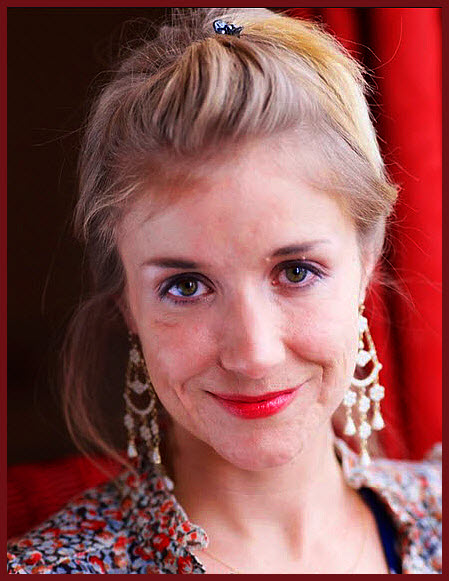
But, this new blog proudly proclaims her name and is adorned with a beautiful photograph of Brooke, who writes:
"Hi! My name is Brooke Magnanti, but you may know me better as the author of theBelle de Jour blog and books. This is where I write about social & political stuff, mostly relating to sex. Yes, there's going to be a book.
As an ex-sex worker, you can imagine what my bias is. Nevertheless, I am also a scientist, so will do my best to present the evidence base for each post.
I love discussion but don't have the time to moderate comments. By all means, feel free to discuss on Twitter or your own blog!
Speaking of which, I'm on Twitter — you can follow me here."
Brooke is beyond bright, articulate and educated, she's a writer with an important voice about many topics that happen to include sex work and sex workers.
In 2009, Brooke revealed her identity after a newspaper was about to disclose it without her permission. Brooke, formerly of Bristol, England, was a noted scientist whose specialist areas were developmental neurotoxicology and cancer epidemiology. She has a PhD in informatics, epidemiology and forensic science and had worked at the Bristol Initiative for Research of Child Health as part of a team that researched the potential effects on babies of their mothers' exposure to toxic chemicals.
But, from 2003 to late 2004, Brooke worked as a high-class call girl for a London escort service. She has written an award-winning blog and several bestselling books based on her experiences as a sex worker. Her writing also formed the basis of the TV series Secret Diary of a Call Girl on Showtime, starring Billie Piper in the title role of "Belle."
As any fan of Brooke's knows, she'd been dating then living with a man referred to only as "T" in her books and blog — because he first began leaving his toothbrush in her flat, then gradually the rest of his belongings. While Brooke has not publicly named him, they have will have been married a year this month.
Recently, she and her husband moved to Scotland, after Brooke decided to take the hiatus from penning new entries for her award-winning blog (Where she says simply, "Belle de Jour is the pen name of Brooke Magnanti, a UK-based writer and science researcher. Interests: whiskey, taphonomy, PGP encryption), in favor of concentrating on writing the new book, a variety of articles, and now as it turns out — her wonderful new blog.
She also decided to leave the field of science behind because of the funding crunch in the U.K. for research projects. She has said that since she has other means of support — name her incredible writing — she didn't want to take a science slot from a researcher who does not.
Since the debut of Sexonomics, it has already generated some lively commentary. As a loyal fan of everything that Brooke writes, I am re-posting her latest blog entry that was posted yesterday. Please read it in its entirety below, or directly at her new blog site:
FRIDAY, 8 APRIL 201
Preaching to the Converted
"When ancient cultures looked at the night sky they saw groups of stars, just the way we do today. They drew imaginary lines between the stars to make pictures and tell stories. The pictures were constellations.
One of the most easily recognisable constellations is Ursa Major (you probably call it the Big Dipper, or the Plough). From Earth the stars seem inextricably linked and for most of history we have had no way of telling otherwise. But we now know that they’re not close to each other at all. Some of the stars in the Plough are 78 light years away from us; others over 120. It’s the particular angle we see them at that makes them look close to each other. If you were living on a planet orbiting some other star, the Plough wouldn’t look the same because you would see the stars from a different direction. And constellations change over time. The last two stars on the handle of the Plough are moving quickly; in 50,000 years it will look completely different from how we know it today. Even here on Earth.
Making constellations from unrelated information happens a lot. But just because things seem to be connected to each other doesn’t mean they are. Humans are hard-wired to find patterns and seek explanations, but sometimes, this tendency can lead to the wrong pictures being drawn.
When it comes to the subject of sex, the habit of making constellations is so pervasive that we take it for granted. Myths, assumptions, and preconceptions take hold even when there is rational evidence to the contrary.
Recently, inspired by a post by Jane Fae on Freedom in a Puritan Age, I contributed a bookending piece. By and large, I agree with Jane's assessment (and Dr Petra's prediction) that the mainstream discussion of sex is getting narrower and more judgmental. I don't like the way in which people invoke pornography, child sexualisation, trafficking, and other issues in the same breath as if they are the same things. I especially don't like when MPs and government do it. But they're responding to a perceived issue that some poll somewhere tells them is important. The problem, as I see it, is how to reach out to people whose views are being influenced by a heavily biased media, and other sources all to happy to join up a constellation and call it the truth.
The title of my piece on FIPA is slightly misleading... while I do believe the 'anti-sex lobby' is irrational, I also think the majority of people worried about these topics are anything but. I can sympathise.
Plenty of people have opinions about these issues, and why not? After all, sex is virtually a human universal. It’s something most of us can claim, if not expertise, at least an enthusiastic amateur interest.
Which is fine, when it comes to something for which we have (ahem) hands-on experience. But once reality diverges from what we know first hand, all kinds of strange rumours can take hold. And once a rumour starts to spread, it’s often hard to stop.
From the first rumours in the school yard, to the first fumblings in the dark, has there ever been a topic more talked about, thought about, argued about? We begin by learning about sex and sexuality from the things we tell each other, and later, learning from our own experiences.
As we get older and gain more insight, our gaze widens: from When will I have sex? What will it be like? How are other people doing it? to broader questions of sexual orientation, relationships, and gender issues. We’re fascinated with the periphery of sex as well as the nuts and bolts of it – prostitution, porn, and sex crimes, just to name a few. Stories about these topics are guaranteed to get news coverage, magazine features, and column inches in the papers. Memoirs, exposes, and kiss-and-tells fly off the shelves. We get our expertise however we can.
But the less direct experience we have, the more we turn back to gathering information the old-fashioned way. The schoolyard way.
Sex, sexuality, and sex work minutiae — for people outside the loop — can be confusing. It's difficult to get and process information about things most of us are never directly involved with. We've a sense all of this stuff is important, but neither the time nor the energy to peruse the scholarly literature, discuss the issues in depth, and get involved. (See also: the problem with science journalism.)
For example, it was once easy for people to believe secondhand stories and rumours about homosexuality, because most people didn’t know anyone who was out. As homosexuality has become more open and more visible, and therefore more people know that they know gay people, the malicious rumours and hatred have finally begun to wane. According to polls by the Washington Postand ABC News, the percentage of people supporting equal marriage rights for gay couples has risen in direct proportion with the visibility of gay people.
But they and other groups who are not widely accepted deal with the brunt of the rumour mill’s damage. Sex workers are another such group. Because a lot of people don’t think they know anyone in sex work, the assumptions and stereotypes hold a lot of sway over opinions in that area. After all, without firsthand experience, who’s to say otherwise? Especially when there are many reasons why sex workers stay "in the closet". What is clear is that we need some way of telling what is real from what is myth.
Also, it's clear that there is a certain amount of (for lack of a better word) circle-jerking in some corners of the internet. I use the term 'the converted' advisedly — some of the harshest, and most underhanded, critics can be people whose point of view is indistinguishable from yours to outsiders. There's a danger in addressing every niggling internecine concern that alienates the mainstream and diverts energy from getting most of the message to most of the people most of the time.
Take for instance the previous entry, which mentions research by (among others) J Michael Bailey. Certain aspects of his methods have come under criticism — though not particularly the studies I mentioned. However, it was as if the word Bailey was a red rag to particular people. Simply by mentioning the relevant findings by a person they hated, I woke up to a Twitter and email storm. That's a pity, because the more I read of Bailey's work in the past year, the more I found that while his critics had a point, there was a lot I agreed with. I could ignore the stuff I agree with. That would probably keep the circle-jerk happy. But it does nothing to advance what this blog is trying to say to a wider audience... those for whom the idea of scientific investigation of human desire may be a new and interesting idea.
Long story short (too late!), I may have lost a few people over daring to mention Bailey, but worrying about breaking a few eggs on the way to an omelette? Never been something that keeps me up at night.
The way I see it, if you're liking and linking to this blog, then you probably are already one of the people who more-or-less sees things the way I do. And if so, I love you for it. Without the research and commentary generated by the sex-positive community, I would have almost nothing to write about. But we spend a lot of time either talking to each other, or arguing with the entrenched opposite. There's a giant group of people in the middle, getting skewed and outdated information because not so many of us are appealing to them. With acceptance such a big issue for so many of us, maybe that's where we should be targeting effort... rather than losing energy on the few whose minds, frankly, will never be changed.
Blogs by sex and relationship educators do a pretty decent job of attempting to bridge this gap. And there are some academics, such as Laura Agustin, who blog about their research and writing. These sorts of things are a vital link between the people who have information, and the many who want it. But there are vastly more people with expertise in these topics who operate entirely within the academic context or only have the time and energy to focus on their jobs. And while informative blogs and sites by current and ex sex workers are popular, there is still the assumption that these people are for some reason the "exception" rather than the "rule". Effective public outreach by the sex-positive (or even just hype-skeptical) community still struggles to get off the ground.
What are ways we can open the discussion, inform and involve the undecided middle? Ideas on the back of a postcard to the usual place, please."
Posted by Belle de Jour 04:57
If you have any interest in thoughtful discussions about sex-related and scientific topics, I urge you to follow Brooke's blog. She is a unique woman, and an equally unique writer who should NOT be missed. It would be a genuine mistake to reject her blog simply because she mentioned some relevant facts from a man who is very unpopular in some circles. [Note: To read one of the counterpoints, see QuietRiotGirl's comments.]
I would be remiss to discuss Brooke and not to mention her wonderful books, which include: Belle de Jour’s Guide to Men, 2009; Belle’s Best Bits, 2009; The Intimate Adventures of a London Call Girl, September 2005; The Further Adventures of a London Call Girl, May 2007; and Playing the Game, June 2009.
Each one is well-worth reading and re–reading, you can trust me! You can find all of her books at the U.K.’s largest independent bookseller, Waterstones.
Also check out Brooke's op-ed articles on a variety of topics including reforming libel law in Britain, and well as the importance of ensuring the rights of sex workers.
Thank you Brooke, for giving us all something well-worth reading again! Long may you reign, m'dear!
— The Curator
The REAL Belle de Jour has always been passionate, and the woman behind the famous moniker maintains that tradition, this time penning an important research paper on rape.
Last year, Belle step out from behind her famous pen name and revealed her identity. She is Dr. Brooke L. Magnanti, formerly of Bristol, England, a noted scientist whose specialist areas are developmental neurotoxicology and cancer epidemiology. She has a PhD in informatics, epidemiology and forensic science and has worked at the Bristol Initiative for Research of Child Health as part of a team that researched the potential effects on babies of their mothers' exposure to toxic chemicals.
But, from 2003 to late 2004, Brooke worked as a high-class call girl for a London escort service. She has written an award-winning blog and several bestselling books based on her experiences as a high-end call-girl in the sex industry. Her writing also formed the basis of the TV series Secret Diary of a Call Girl on Showtime, starring Billie Piper in the title role of "Belle."
Recently, Brooke moved to Scotland, taking a hiatus from penning new entries for her award-winning blog (where she says simply, "Belle de Jour is the pen name of Brooke Magnanti, a UK-based writer and science researcher. Interests: whiskey, taphonomy, PGP encryption), in favor of concentrating on writing a new book, and a variety of articles.
The latest, presented below in its entirety (or read it directly at the article's website) is an important analysis, called a 'Green Paper,' of the correlation between the impact of public adult entertainment, specifically lap-dancing clubs, in the U.K. and rape statistics, which also has clear implications for the U.S., too.
No stranger to controversy, Brooke's conclusions are sure to raise eyebrows across the pond, as her careful research refutes the so-called "Lilith" study from 2003 that garnered widespread media attention in the U.K., which found a direct cause and effect relationship between the two in Camden Town, London.
"In spite of mathematical corrections to the statistics in the report, its original conclusions are still widely reported in both academic and mass media," Brooke writes.
In fact, Brooke proves in her meticulous analysis that the 2003 conclusions are wrong, writing, "...the original claim made in the Lilith report, that the number of reported rapes is rising due to lap dancing clubs, is not true."
Brooke says much more research into the true causes of rape are needed.
"The causes of rape and violent crime are not well understood, and there is much research and discussion devoted to understanding the causes of this crime so that it may be better controlled. It is possible that repeating limited and erroneous numbers can derail efforts to control violence and deflect attention and funding from alternative causal theories. It is because rape is such a serious crime that researchers must be at least as rigorous in their analysis as they would with other serious life events, and apply the same careful methodology as would be used in other areas of research," she writes.
Whatever Brooke decides to write, her voice is powerful and important, and should be carefully considered.
Without further ado, here is Brooke's research paper (including the British spellings):
The impact of adult entertainment on rape statistics in Camden: a reanalysis.
19 January 2011 http://belledejour‐uk.blogspot.com © Brooke Magnanti
The impact of adult entertainment on rape statistics in Camden: a re-analysis.
Brooke L Magnanti, PhD.
Abstract
A 2003 report on the impact of lap-dancing clubs on sexual assault in Camden, London had significant influence on the perception of the contribution of adult entertainment to crime statistics. In spite of mathematical corrections to the statistics in the report, its original conclusions are still widely reported in both academic and mass media. This paper presents a broader analysis of the impact of lap-dancing clubs by calculating accurate rates of incidence, analysing statistics from a longer time period, and comparing the results with crime rates in neighbouring boroughs of London. The rate of rape in Camden is lower than that in comparable boroughs, including ones with no such clubs. The overall trend for London boroughs, while higher than the national average, shows a decrease where national statistics are on the increase.
Introduction
The question of whether, and to what extent, the presence of adult entertainment businesses affects crime in the surrounding area is a topic of debate in many disciplines, including sexuality studies, urban planning, and criminology. It is also an issue that attracts considerable mass media attention, which in turn can frame the debate as considered by media and government.
In 2003, a report was released by Lilith Research and Development, a subsidiary project of Eaves Women’s Aid, a London women’s housing agency. The report examined the phenomenon of lap-dancing clubs in the north London borough of Camden and its effects on crime rates from the late 1990s onward. One conclusion that received considerable attention was the statement that following the introduction of lap-dancing clubs, rape in Camden rose by 50%. (Eden 2003).
In 2009, corrections to the statistics were reported in the Guardian stating that
the change between 1999 and 2002 was a somewhat lower increase of 33%
(Bell 2008). It still however implies evidence of a cause-and-effect relationship
between lap dancing clubs and rape. The uncorrected claims that rapes rose by 50% after lap dancing clubs opened and that Camden’s incidence of rape is three time the national average are still reported in national and international media (Hunt 2009, Guest 2010).
However, the original paper on which these claims are based suffers from numerous statistical problems in its analysis. The first is that the use of raw numbers rather than rate of occurrence does not accurately reflect the risk per
head of population in Camden. The second is that the paper failed to show a
trend long enough from which to draw meaningful conclusions. The third is that the study did not accurately put the results in context with trends elsewhere in London and in the UK as a whole, in order to test the theory that any change in crime rates was an effect specifically of the existence of lap dancing clubs.
This reanalysis seeks to correct those problems so a more accurate picture of
the effect of lap dancing on Camden may be discussed, and the new figures
enter into the public debate on adult entertainment and urban spaces.
1. Rate calculations
In reporting outcomes in a population over time, it is important to calculate in
incidence rate of outcomes in order to account for changes in the size of the
population and thereby produce statistics that can be sensibly compared. The
original paper, and subsequent corrections, did not do this.
The numbers on reported rapes were obtained directly from the Metropolitan
Police, though at least some of the numbers are freely available on the web. The numbers reported in the original paper have been checked against the
Metropolitan Police numbers to confirm they are correct.
Both the original numbers of rapes in the Lilith report, and the note in the
Guardian correcting an arithmetic error from the paper and subsequent reporting, did not calculate the incidence rate of reported rapes per head of population.
However, London is a rapidly growing city. Without the context of population
change, this renders fluctuations in the results impossible to interpret meaningfully.
The Lilith report focuses on the difference in rapes between 1999 and 2002.
However, in its first paragraph, the report states that lap dancing ‘arrived in
Britain in 1997 with the opening of Secrets in Hammersmith’. The reasoning why the statistics used in that report start 2 years later is unclear. In order to facilitate comparison with the original report, statistics calculated in this paper will also start from 1999.
The number of reported rapes as given by the Metropolitan Police includes rapes against both men and women, and this is the number reported in the original paper. Therefore for the purposes of calculating the rate of reported rapes per 100,000 population, the total male and female population of Camden has been used. The population count is as reported in the National Statistics adjusted midyear estimates. The rates are shown in Table 1.
Table 1: Rates of rapes per 100,000 population, Camden, London, 1999-2002
Year Reported-Rapes/Population Rate per 100,000/Percentage
1999-72/195,700/36.8
2000-88/202,800/43.4
2001-91/202,600/44.9
2002-96/205,700/46.7
Using the rate of rapes per 100,000 population, the change from 1999 to 2002 is an increase not of 50% (as originally reported and still repeated) or 33% (as in the later correction) but of 26.9%, or about half of what was in the original paper.
2. Longer-term trend analysis
Unfortunately because of the limited time period covered in the original report,
even with accurately calculated rates it is difficult to tell whether the increase was sustained, and therefore indicative of a trend. We know that between 1999 and 2000 the rate of reported rapes in Camden rose but because it is a relatively rare event, it can be expected that there will be high volatility in the number of reported rapes and that this will affect the rates. Therefore with numbers now available to represent the last decade, a more complete picture can be constructed. The results over a decade show a markedly different trend to what was originally reported – the rate does rise, but then subsequently falls again.
The results are shown in Table 2, and a graph of the rates in Figure 1.
Table 2: Rates of rapes per 100,000 and percentage annual change, Camden, 1999-2008
Year Reported rapes
Population Rate per 100,000
% change
1999-72/195,700 36.8 n/a
2000-88/202,800 43.4 + 17.9%
2001-91/202,600 44.9 + 3.5%
2002-96/205,700 46.7 + 3.9%
2003-71/207,700 34.2 - 26.8%
2004-52/212,800 24.4 - 28.5%
2005-68/218,400 31.1 + 27.4%
2006-67/221,500 30.2 - 2.8%
2007-70/223,900 31.3 + 3.4%
2008-41/226,500 18.1 - 42.1%
Figure 1: Trend of rape rates in Camden, London, 1999-2008
3. Local and national trend comparison
The original report compares Camden’s rape reports to the numbers from the
boroughs of Westminster and Islington. All of these boroughs contain lap dancing clubs. However it does not contain a comparison with a comparable borough with no such clubs.
In order to improve the assessment between boroughs we have retained a
comparison with Islington, but also added a non-lap dancing borough with a
similar demographic profile in order to minimise socioeconomic confounders.
Lambeth has a somewhat larger population than Camden and similar makeup in terms of ethnic origin. It contains no lap dancing clubs at all. Islington has a
somewhat smaller population than the other two boroughs and has two venues
licensed for fully nude lap dancing. Rape reporting statistics are also available for England and Wales as a whole, so these have been included for reference in Table 3, with the rates graphed in Figure 2.
Table 3: Rates of rape in Camden, Lambeth, Islington, and England & Wales (comb), 1999-2008
Year Rapes in Camden
Rate in Camden
Rapes in Lambeth
Rate in Lambeth
Rapes in Islington
Rate in Islington
Rapes England & Wales
Rate England & Wales
1999-72/36.8 128 48.0 75 42.7 7636 14.7
2000-88/43.4 156 57.8 94 52.8 8409 16.1
2001-91/44.9 163 59.6 72 40.1 8593 16.4
2002-96/46.7 172 63.2 109 60.5 9734 18.5
2003-71/34.2 166 61.3 135 74.4 12295 23.3
2004-52/24.4 126 46.3 97 53.4 13272 25.0
2005-68/31.1 146 53.2 93 50.4 14013 26.2
2006-67/30.2 139 50.2 76 41.0 14343 26.7
2007-70/31.3 127 45.5 89 47.6 13774 25.5
2008-41/18.1 99 35.2 68 36.1 12637 23.2
Figure 2: Trend of rape rates in Camden, Lambeth, Islington, and England & Wales (comb), 1999-2008
If a cause-and-effect relationship between the number of lap dancing clubs and the occurrence of rape existed, we would expect Lambeth to be lowest of the three because it has no clubs. By the same assumption we would expect
Islington to be higher because it has a couple, and Camden highest because it
has more than those other boroughs. The analysis however shows that Camden is consistently the lowest of the three. The results do not support a causal link between the number of lap dancing clubs in a borough and the risk of rape.
The trend for the three London boroughs shows that Lambeth (with no lap
dancing) and Islington (with only 2 clubs) both have rates that are higher than
Camden’s. It also demonstrates that all three have decreased over time, while
the trend in England and Wales over the same time period has been for a rise.
Apart from the early 2000s peak, Camden’s numbers are similar to the overall
rate for England and Wales, and are sometimes below it. In the original report it was claimed that Camden’s rapes were “three times the national average,” and this has been reported elsewhere. This new analysis shows that statement is not true at any point within the studied time period.
Discussion
Rape is widely accepted to be a vastly under-reported crime. The calculations do not reveal whether rapes were under-reported for the area in any particular year, nor what the causes of that might be. What it does demonstrate is that the original claim made in the Lilith report, that the number of reported rapes is rising due to lap dancing clubs, is not true.
The causes of rape and violent crime are not well understood, and there is much research and discussion devoted to understanding the causes of this crime so that it may be better controlled. It is possible that repeating limited and erroneous numbers can derail efforts to control violence and deflect attention and funding from alternative causal theories. It is because rape is such a serious crime that researchers must be at least as rigorous in their analysis as they would with other serious life events, and apply the same careful methodology as would be used in other areas of research.
Other research supports the conclusion of no demonstrable causal link between adult entertainment and rape. A meta-analysis of 110 studies looking at the impact of strip clubs and other adult businesses found that the studies in favour of abolishing exotic dancing suffer from flaws in research methodology. Of the papers that did not contain fatal flaws, there was no correlation between any adult-oriented business and any negative effect (Bryant, Linz and Shafer 2001).
Ethnographic work also supports the conclusion that there is no direct
relationship between adult entertainment and crime (Hanna 2005).
Nevertheless it is a widely held assumption that endemic exposure to adult
images and entertainment makes rape more likely to occur. Even if there was
conclusive evidence for this, why would the rapes necessarily occur in Camden?
The area containing the clubs is a small corner of a much larger borough
bordering other parts of London. It is well-connected with public transport going in and out of the area. In addition, one might expect such a well-known
entertainment venue has customers travelling from elsewhere in the country to
see it. There is no evidence, even if literature supported an exposure aetiology of rape, that the crimes would necessarily be committed in Camden. Such possible confounding factors are not addressed in the original study.
The paper also strongly implies that the rapes are stranger rapes. A Home Office report analysing relationships between victims and offenders notes that for rapes, strangers are the perpetrators in only 17% of UK cases (Walby and Allen 2004). 75% of reported rapes occur either in the victim’s home or in the perpetrator’s (Myhill and Allen 2002). Even if lap dancing businesses were shown to contribute to stranger rape, this alone could not explain large changes in the statistics of reported rapes overall.
In much writing on sexual assault there seems to be a belief that rape stems from an inability of men to understand communication that is indirect; that they are unable to parse any rejection other than a firmly stated 'no'. Not only has this idea led to defendants in rape cases claiming they didn’t know someone said no, it is also not supported by research.
Men and women may weigh the value of verbal and nonverbal cues differently, but show little difference in the end when categorising situations as rape (Lim and Roloff 1999). For all the firmly held stereotypes, men know that no means no. Men who rape don’t do so by accident; ordinary men without tendencies to rape do not do so inadvertently or because they went to a lap dancing club.
Brooke Magnanti is the author of several memoirs, including The Intimate Adventures of a London Call Girl. She has worked extensively in research of forensic science, population trends and biostatistics.
The impact of adult entertainment on rape statistics in Camden: a reanalysis.
19 January 2011 http://belledejour‐uk.blogspot.com © Brooke Magnanti
Works Cited
Bell, R, 2008. I was seen as an object, not a person. The Guardian. 19 March p18.
Bryant, P Linz, D and Shafer, B, 2001. Government regulation of adult
businesses through zoning and anti-nudity ordinances: Debunking the legal myth of negative secondary effects. Communication Law and Policy 6(2): pp 355-91.
Eden, I, 2003. Lilith Report Lap dancing and strip-tease in the borough of
Camden. [online] Available at: http://www.childtrafficking.com/Docs/poppy_03_lap_dancing_0109.pdf [Accessed 28 December 2010].
Guest, K. Lap dancing is seedy – but it's hard to say why. The Independent,
[online] Available at: http://www.independent.co.uk/opinion/commentators/katyguest-lap-dancing-is-seedy-ndash-but-its-hard-to-say-why-2064794.html [Accessed 28 December 2010].
Hanna, J L, 2005. Exotic Dance Adult Entertainment: A Guide for Planners and Policy Makers. Journal of Planning Literature 20(2): pp 116-134.
Hunt, T, 2009. Betting shops and strip clubs stand as monuments to New Labour morality. The Guardian, [online] Available at: http://www.guardian.co.uk/commentisfree/2009/aug/06/labour-moral-marketgambling-society [Accessed 28 December 2010].
Lim, G Y and Roloff, M E, 1999. Attributing sexual consent. Journal of Applied Communication Research 27(1): pp 1-13.
Myhill, A and J Allen, 2002. Rape and sexual assault of women: findings from the British Crime Survey. London: Home Office Research Study 159.
Walby, S and J Allen, 2004. Domestic violence, sexual assault and stalking:
Findings from the British Crime Survey. London: Home Office Research Study 276."
Brooke's books include: Belle de Jour’s Guide to Men, 2009; Belle’s Best Bits, 2009; The Intimate Adventures of a London Call Girl, September 2005; The Further Adventures of a London Call Girl, May 2007; and Playing the Game, June 2009.
Each one is well-worth reading – trust me! You can find all of her books at the U.K.’s largest independent bookseller, Waterstones.
Also check out Brooke's op-ed articles on a variety of topics including reforming libel law in Britain.
— The Curator